[youtube=http://www.youtube.com/watch?v=B1qZ_DaUx_o&rel=0]
The Galapagos islands are known for Darwins theory, but there are more to these isles than adaptation. Romans 1:19-20

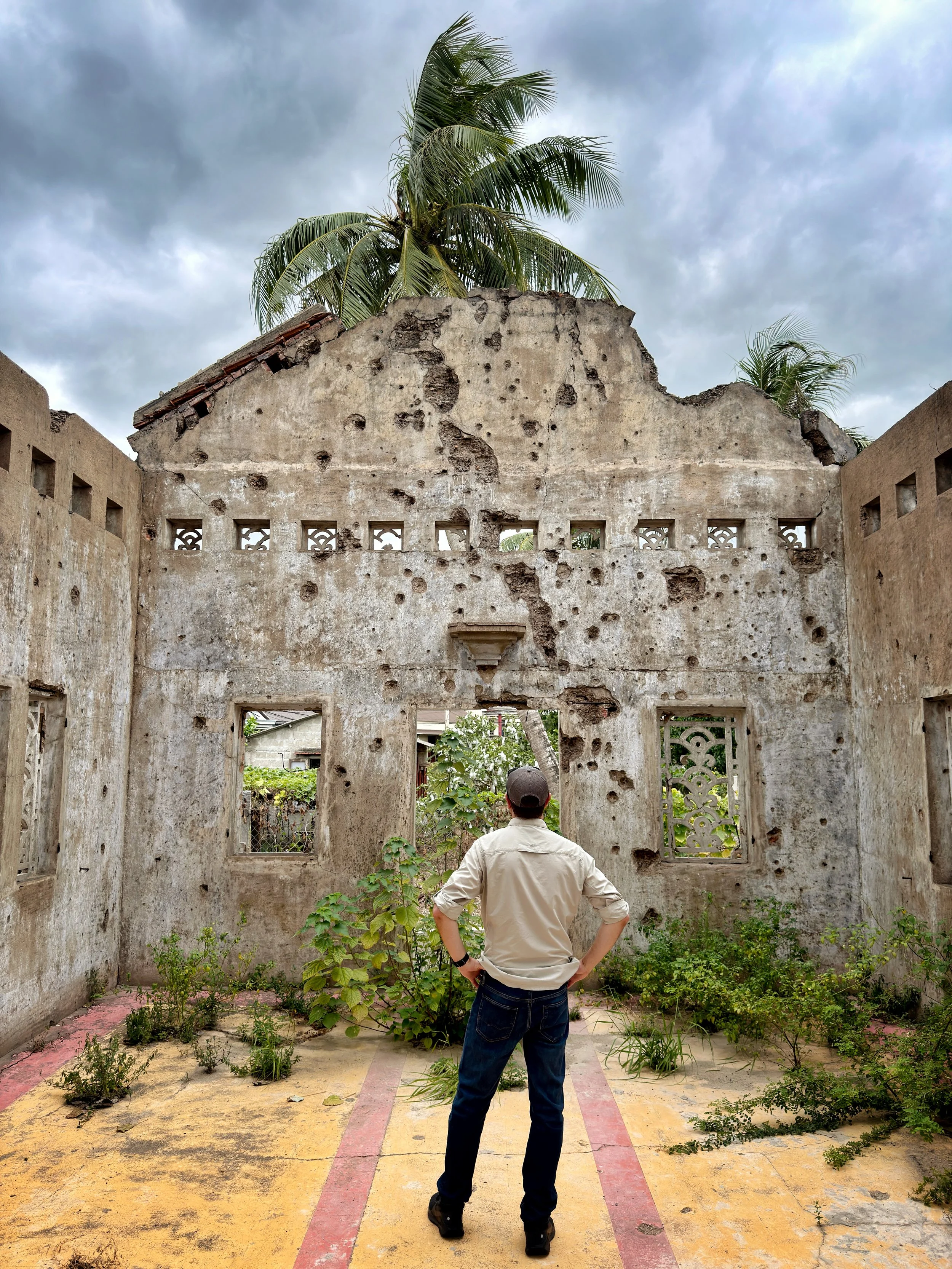
There is a particular quality to the air in a place that has been through fire. Not the romantic fire of a hearth or a campsite — but the kind that consumes entire cities, that levels what generations built, that leaves a landscape so altered it is almost unrecognizable to the people who once called it home. Vietnam knows that kind of fire. Walking through this country today — through the streets of cities that were once reduced to rubble, past a countryside that absorbed some of the heaviest bombardment in the history of modern warfare — you are walking through what came after. You are walking through the after-ashes.
And what you find is not what the logic of destruction would predict. You find life. You find rebuilding. You find a nation that absorbed one of the most devastating conflicts of the twentieth century — a war that consumed Americans and Vietnamese alike, that shattered families on both sides of the Pacific, that left an entire generation carrying wounds that no government program and no passage of time has ever fully healed — and kept going. The question that this place forces on every honest observer is not simply historical. It is profoundly personal. How does anything — a nation, a soul, a life — rise from ashes? What makes the difference between the ruins that stay ruins and the ruins that become something new?
There is a posture that God invites every believer into — and most of us spend our entire lives fighting it. Not because we are wicked or faithless, but because the world has trained us, from our very first breath, to grip things tightly. To scheme, to strive, to press, to worry, to manufacture outcomes through sheer force and anxiety. The world calls this wisdom. And it has produced in the hearts of God’s people a deep, chronic, soul-wearying strain that was never part of His original design for us.
Jesus said it plainly, without qualification, to people living in conditions far more precarious than most of us will ever face: “Do not worry about your life.” — Matthew 6:25.
There is a thread that runs through all of Scripture — a pattern so consistent that once you see it, you cannot unsee it. It is not the pattern the world expects. It is not the pattern even the religious establishment of any given era expected. It is this: God does not choose the way man chooses. He does not select the powerful, the credentialed, the connected, or the ones whose résumé impresses the room. He reaches past the inner circle, past the halls of influence, past the people who have built their identity on being in — and He finds the one standing at the edges. The outsider. And He changes the world through them.
Here is a hard truth that must be spoken: a large portion of the modern church has grown deeply, profoundly, tragically ashamed of the gospel. Not ashamed in so many words. No one stands at a pulpit and announces that they find the cross embarrassing. But the evidence is visible in what is preached — and far more in what is not. The blood of Christ has been quietly removed from the vocabulary of too many congregations. Sermons about sin, judgment, and hell have been replaced with messages designed to comfort, entertain, and above all, not offend. The thunderous warning from 2 Timothy is being fulfilled in real time: “For the time will come when people will not put up with sound doctrine. Instead, to suit their own desires, they will gather around them a great number of teachers to say what their itching ears want to hear.” — 2 Timothy 4:3.
The battle we face is not primarily political, social, or economic. It is not fought with weapons that can be seen or measured by human instruments. The conflict that defines the Christian life takes place in a realm invisible to the natural eye — a dimension where principalities and powers, thrones and dominions, wage war against the souls of mankind. Scripture pulls back the curtain on this invisible conflict with startling clarity in Ephesians that our struggle is “Not against flesh and blood, but against principalities, against powers, against the rulers of the darkness of this age, against spiritual hosts of wickedness in the heavenly places” — Ephesians 6:12. Notice the plural — not one enemy, but organized forces. Not localized skirmishes, but systemic warfare across a spiritual geography that spans “the heavenly places.” This is not a metaphor. This is not poetic language meant to inspire. This is literal spiritual reality. Every believer lives embedded in a war zone. Every decision, every prayer, every step of obedience either advances the kingdom of darkness or advances the kingdom of light. There is no neutrality. There is no middle ground. Jesus Himself confirmed this reality when He addressed the seventy disciples upon their return: “I saw Satan fall like lightning from heaven.” — Luke 10:18. The adversary was not defeated by human strategies or institutional power. He fell because of the authority delegated by Christ Jesus.
[youtube=http://www.youtube.com/watch?v=B1qZ_DaUx_o&rel=0]
The Galapagos islands are known for Darwins theory, but there are more to these isles than adaptation. Romans 1:19-20
Dear Friends, Greetings in the Lord. As we emerge from the remote jungles of the Amazon basin we are encouraged by your support, in prayers and finances, as we attempt to reach those who have never been reached before.
Uncontacted Expedition AMAZON Part One: Matthew 24:14 “And this gospel of the kingdom shall be preached in the whole world for a witness to all nations, and then the end shall come.” Today we stand on the precipice of accomplishing the great commission. The last frontier is that of the undiscovered and uncontacted. Imagine there are people on earth who have no contact with the outside world and no knowledge of the good news. This is our mission.
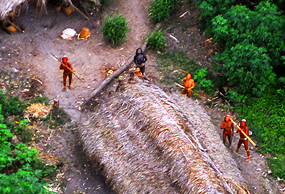
On May 30th, 2008, images of an uncontacted tribe hit the mainstream media with shock and awe. They displayed red and black painted figures pointing arrows at the hovering aircraft above. This tribe had never made contact with the outside world. As soon as we saw this we began our preparations to reach tribes just like that one.
Almost one-year later we bumped our way over the twisted jungles in a small floatplane. Our destination—a remote Amazon tributary. Our mission—first contact. This wasn’t just first contact for the gospel, but first contact for anything. The tribe we were attempting to reach was much like the ones pictured in the spectacular photos, but living in a different area.
First contact is much more difficult than one might think. There is no known language, other than commonalities of root tribal dialects, there is no assurance of peaceful contact, and there is no knowledge that this tribe wants to be contacted. Questions, and important ones at that, but all the answers were in the jungle.
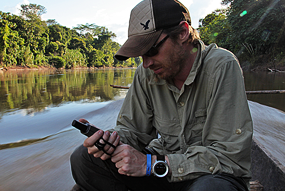
Landing on the shores of a muddy river we set up camp at a small village that would be our headquarters. Our expedition party was 7-members and thousands of prayer warriors (You!). The team on the ground was two local Bushmen from the village, two bush pastors, one translator, and the two of us. Immediately we set ourselves to interviewing locals at this small village and piecing together where we might make contact. The rivers and tributaries of the Amazon basin were now receding, as dry season approached, and this was the time of year in the past that most sightings occurred.
First, we wanted to gather the most accurate information and interview as many people in various villages as possible. In our interviews, two stories stood out the most to us. The first was of an older man, who recently while hunting a bird deep in the jungle noticed something as he aimed his gun towards the treetops. Sensing a presence he looked over and saw two males from this uncontacted tribe hunting the same bird. They approached him in a friendly manner and started to speak. He said he could not understand them, but will never forget what they looked like. He said they were naked, save a small string tied around their waste, holding up their male member. They had long hair, and strangely, beard hair that grew long below their jaw line. He ran away in fear and didn’t stop running until he reached the river 5 KM from his village. The second story occurred only 15 days ago and was told to us from the brother of one of the pastors on our team. He said he was hunting in the jungle 6-hours from our current location, and upon coming over a small hill in the jungle, he looked down to see four males from this mysterious tribe fishing in a stream with spears. He watched them for a minute and then ran away. They were close, and in the area, but nomadic, so it was important for us to head into the jungle right away.
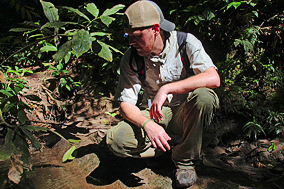
The existence of this uncontacted tribe had been confirmed by more than just the villagers living in the area, but by anthropologists and the scientific community as well. We interviewed dozens of eyewitnesses and used resources from our previous research to pin point locations on the GPS where the tribe had been spotted the most. In rare circumstances the tribe had even been seen on the shore of the large river collecting turtle eggs. We were ready to head into the jungle and start our search.
All the stories of brief contact with the villagers led us to believe this tribe was just as curious of outsiders as we were of them. The evidence also suggested they had tried to make contact in the past, but were fearful. Both peoples seemed to be afraid of each other, setting up an uneasy feeling between each tribe. At first, before we even arrived in the village, we had heard only negative stories about this uncontacted tribe’s behavior, and even threatening stories about violent encounters, but after our interviews we concluded that this was not the case. Eyewitness reports confirmed their described behavior was more curious than threatening.
For contact, before we entered the jungle, we left it up to the Lord. Perhaps they do not want to be contacted? We cannot force contact or in the same right presume they do not want to have any. God made himself evident to all mankind through his creation (Romans 1:19-20). Our mission was to give this tribe the choice to make peaceful contact with us.
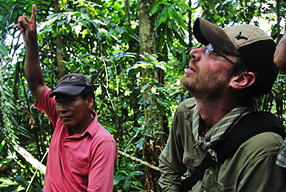
So we set off into the harsh jungles and readied ourselves for whatever we might face… Part Two coming next month.
With your help in prayers and finances we are able to conduct gospel expeditions like the uncontacted journey. Your help is needed more than ever as we attempt to bring the gospel where it has never gone before. Our mission is not only to speak the good news, but also to carry that message to all mankind. Together we can do this and finally fulfill Matt. 24:14! Let us reach beyond ourselves and touch the unknown with the life saving message of Christ Jesus! Please consider supporting us through a one-time gift or monthly support. Our next missions include: Anti-Narcotics missions in Colombia, first contacts, and island revival campaigns. You are family to us and your support is treasured and needed. Peace be with you.
In Him, Tim and Will

[youtube=http://www.youtube.com/watch?v=n7741vMk_14&rel=0]
[youtube=http://www.youtube.com/watch?v=-iRgkZrsPrE&rel=0]
This cooling routine was repeated everyday for 8 days. Jungle marches were tough but worth it.
[youtube=http://www.youtube.com/watch?v=MCRmWpX7kA4&rel=0] Only one can of tuna a day. Eat with hands. Fish never tasted so good.
[youtube=http://www.youtube.com/watch?v=kblwx_wlDUA&rel=0]
[youtube=http://www.youtube.com/watch?v=qVvUlUSvGFc&rel=0] This video is taken on a small canoe. 5 minutes later the rains came and we spent a terrifying 5 hours trying not to sink and make it back to camp alive.
Stay updated! Follow us on Twitter.

[youtube=http://www.youtube.com/watch?v=gAoTn09bKi8&rel=0]
[youtube=http://www.youtube.com/watch?v=eWi_zJjc6bQ&rel=0]
[youtube=http://www.youtube.com/watch?v=CfmbZNdGvUI&rel=0]
[youtube=http://www.youtube.com/watch?v=ab0DbxDLdPY&rel=0]
[youtube=http://www.youtube.com/watch?v=qfpS81LGSNQ&rel=0]
Stay up to date with the journey! Follow us on Twitter.
[youtube=http://www.youtube.com/watch?v=zY6ixgCNmz4&rel=0] Check back tomorrow for an exclusive video from the Uncontacted Journey.
[youtube=http://www.youtube.com/watch?v=v_9nE53T8TU&rel=0]
[youtube=http://www.youtube.com/watch?v=NnISiVCdZZw&rel=0]
Stay up to date with the journey! Follow us on Twitter.
[youtube=http://www.youtube.com/watch?v=kK7QX54BKzY&rel=0]
Stay up to date with the journey! Follow us on Twitter.
Dear Friends, Greetings in the Lord. We want to thank you for your prayers over the last month, as they have opened the door for the gospel in an area that has been held in darkness. It is with your help that we tread new paths and deliver the message of hope, so please continue in every way.
This month we would like to share about our time in Potosi, Bolivia. Potosi is a high altitude town (13,500 feet) in the southern regions of Bolivia. At first glance, when one arrives, you would think it was just like any other Bolivian town, but Potosi has a history that literally shaped the course of the world.
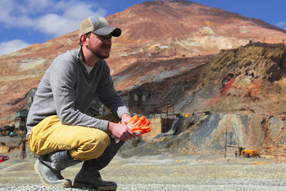
In 1546, the city of Potosi was founded, and by the end of the 16th century it was the richest city in the world! How, one might ask? —Silver. There is one distinctive geographical feature that separates Potosi from any other city, and that is the towering mountain that sits above it called Cerro Rico (Rich Mountain). The mountain of Cerro Rico was the richest silver mine in the world from 1560-1800. It was the breadbasket of the Spanish Empire and where the majority of the Spanish wealth was derived. Ever wonder where Spain got their money to build the mighty Spanish Armada? Answer—Cerro Rico.
By 1672, a mint was established, in Potosi, to coin silver and water reservoirs were built to fulfill the growing population's needs. At that time, more than eighty-six churches were built and the city's population increased to nearly 200,000, making it one of the largest and wealthiest cities in Latin America and in the world. At that time, Potosi had a larger population than Paris, Madrid, or London.
Unfortunately, such wealth came at extreme costs. Over eight million people were killed by forced labor in the mines and the religious manipulation of the Spanish Catholic Church caused effects that still keep the people of Potosi in darkness.
Now jump ahead to Potosi 2009. Arriving in the city of Potosi you immediately see the view of defunct colonial churches and the towering sight of Cerro Rico. The mines are still worked today, mostly by locals who brave the deep tunnels to extract silver by hand. Our mission was to minister to the miners of Cerro Rico and bring the gospel to Potosi. There are no foreign missionaries working in Potosi and the spiritual climate is very dark.
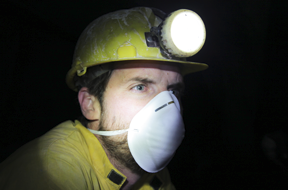
One story we heard, before we entered the mines, was the active worship of the devil inside Cerro Rico. The history behind this was shocking. It all started when the Spanish felt it necessary to motivate the slaves that worked the mountain. So, Spanish authorities created a god that the slaves could worship inside the mines. Also, because they deemed slaves less than human, standard Catholic Christ and Mary worship weren’t a consideration. The Spanish thought the slaves (many of them darker skinned Africans and local Indians) were sons of the devil, so they ought to worship Satan, as they were already damned to hell anyways. The Spanish told the miners these demon idols were God. In the Spanish language God is called Dios, but the local Indians couldn’t pronounce the letter D so they quickly called the idols Tio. Or El Tio, which means, The Uncle in Spanish. When we traveled deep inside the mines we came across the Tio idols and witnessed the miners who still worship them as God. We saw Tio idols dating as far back as the 16th century. So with all that back-story our mission was set to bring the truth.
Five separate days we moved deep inside the mines sometimes traveling as far as 4km and crawling through openings only 18-inches. The gases, silica and asbestos caused us to cough uncontrollably at times, and certain mine shafts that we entered were over 100 degrees in temperature. The detonations of dynamite kept us all on edge and it wasn’t hard to see why most miners only last 10-15 years in these conditions. But the biggest killer inside the mines isn’t explosions or tunnel collapses, but lung disease and toxic fumes.
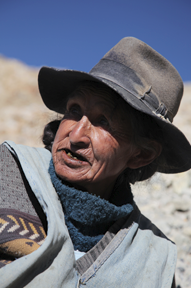
As we traveled deeper and deeper every day we delivered gospel tracks and small $2 solar powered radios tuned to a Bolivian gospel radio station to each miner we came across. We also talked with miners in small groups as they chipped away at the rock. One man we talked to was killed 6-days later when toxic gases overcame him in the very area we chatted. This might have been the only chance for him to hear the gospel. Outside the mines we also ministered to women who sorted through the rubble looking for discarded minerals (women are not allowed to work inside the mine because it is considered back luck). In one circumstance we ministered to two elderly ladies. One of the ladies was 81-years old and had worked outside of the mines picking through rocks for 50 years. She told us she made .20 - .50 cents a day for her work. We prayed and shared the word with them and they were grateful to hear the gospel. They were also thankful to receive the small gospel radios and turned them on right away.
In our travels to Bolivia we found an area with a rich and dark history that once was the center of the world. But today this area has been forgotten. We need more laborers to be sent into the harvest. If a city like Potosi, which was once the largest and richest in the world, could be forgotten, no city in the world is safe. We must speak the message and be bold to take the gospel everywhere.
Your prayers and support have enabled us to reach places like Potosi and establish the beginnings of something great with the local ministries in Bolivia. We will need your support more than ever as our next mission will bring us to an uncontacted tribe in Peru. The journey will be long and difficult, but with your prayers, a hedge of protection is around us and with your giving we have the means to make such journeys. Please consider supporting Travel the Road through a one-time gift or monthly donation. Your support is critical and we need it more than ever, as together we attempt to complete the great commission.
In Him,
Tim and Will
[youtube=http://www.youtube.com/watch?v=f0HxybgGOFI&rel=0]