
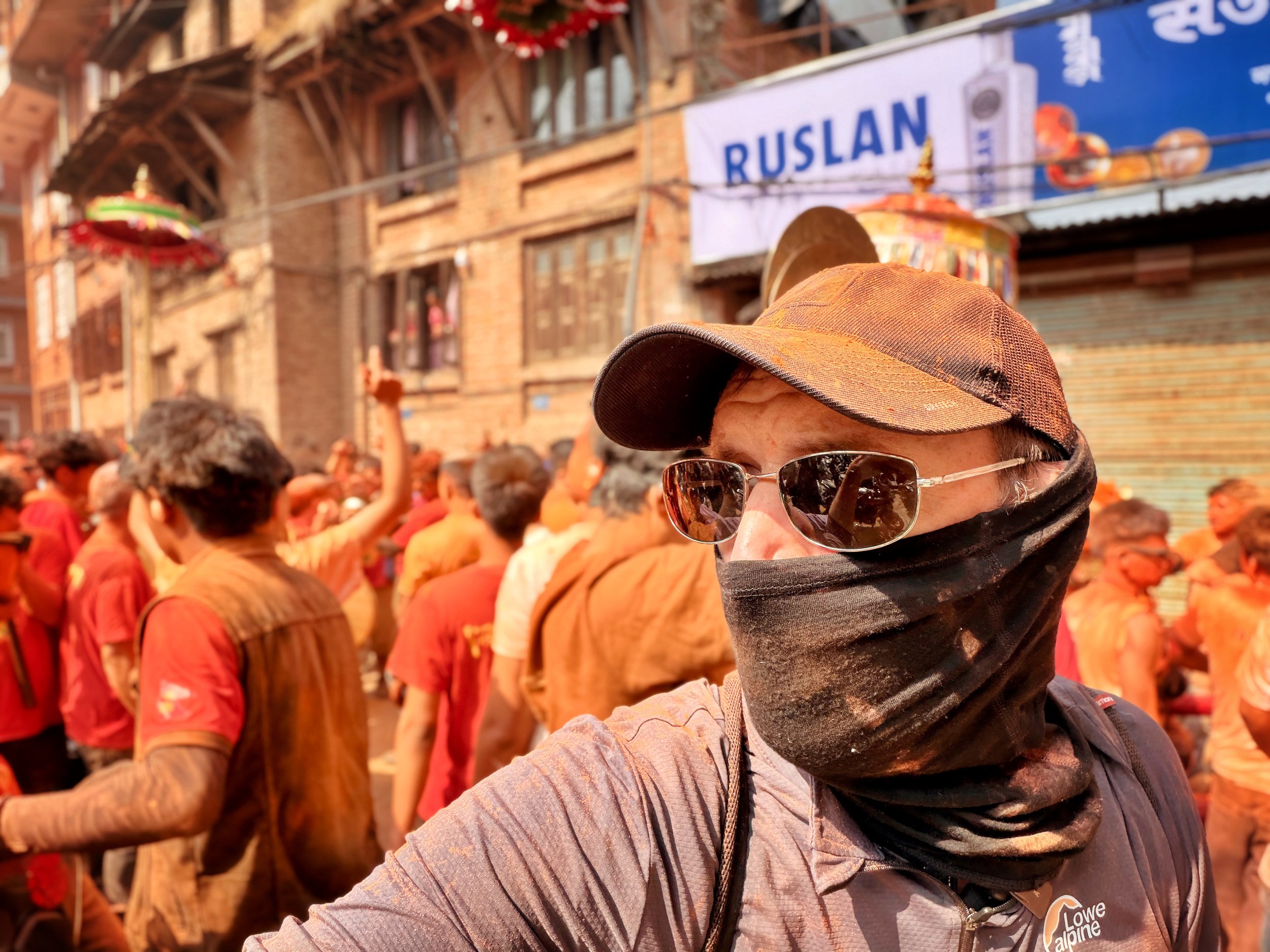
Outsider
God's Pattern of the Unlikely
There is a thread that runs through all of Scripture — a pattern so consistent that once you see it, you cannot unsee it. It is not the pattern the world expects. It is not the pattern even the religious establishment of any given era expected. It is this: God does not choose the way man chooses. He does not select the powerful, the credentialed, the connected, or the ones whose résumé impresses the room. He reaches past the inner circle, past the halls of influence, past the people who have built their identity on being in — and He finds the one standing at the edges. The outsider. And He changes the world through them.
This is not a coincidence. It is not sentiment. It is the sovereign design of a God who will not share His glory with mankind's achievement. "God has chosen the foolish things of the world to put to shame the wise, and God has chosen the weak things of the world to put to shame the things that are mighty; and the base things of the world and the things that are despised God has chosen — things which are not, to bring to nothing things that are" — 1 Corinthians 1:27-28. Not occasionally. Not reluctantly. This is His chosen method. And it is as relevant today as it was on the shores of the Sea of Galilee.
If you have ever felt like you are on the outside — overlooked, underestimated, displaced from where the influence lives — pay close attention. You may be exactly where God does His best work.
The Fishermen, Not the Pharisees
When the Son of God stepped onto the earth as the long-awaited Messiah, the entire religious establishment of Israel was in place. The scribes and Pharisees were educated men — deeply versed in the Law, saturated in tradition, trained from childhood in the text. They had the authority. They had the platform. They had the pedigree. By every worldly standard, they were the ones Jesus should have recruited. They were the inner circle of Israel's spiritual life, but He walked past them and went to the water. He called fishermen. He called a tax collector despised by his own people. He called men who carried no religious credentials, no institutional backing, no standing in the Sanhedrin. And He said, "Follow Me, and I will make you fishers of men" — Matthew 4:19. Notice the language: I will make you. They were not already qualified. They were not already formed. They were available, willing, and free from the rigid architecture of tradition that had calcified the hearts of the very men who should have recognized the Messiah when He stood before them. The Pharisees knew the Scripture. But they had organized their entire identity around what they already believed, not around what God might yet reveal. Their tradition had become a wall, not a window. The fishermen had no such wall. They were willing to learn — not from a religious system, but from the living God Himself. That willingness to be taught, rather than simply confirmed in what was already known, was precisely what made the difference. "At that time Jesus answered and said, 'I thank You, Father, Lord of heaven and earth, that You have hidden these things from the wise and prudent and have revealed them to babes'" — Matthew 11:25. God does not resist the humble learner. He resists the one who has already decided they have nothing left to receive.
The Separateness of the Prophets
Long before the New Testament, the pattern was already ancient. The prophets of God were not men who moved comfortably within the mainstream of their societies. They were, without exception, outsiders — men who heard a voice the crowd could not hear, and who carried a word the crowd did not want.
Jeremiah was called before he was born: "Before I formed you in the womb I knew you; before you were born I sanctified you; I ordained you a prophet to the nations" — Jeremiah 1:5. He protested immediately. He was young, he was unknown, he was unready by his own estimation. God's answer was not to reconsider. It was to touch his mouth and put His words in it. Jeremiah would spend his life weeping over a nation that would not listen, preaching a message that would land him in a cistern, in stocks, and in chains — and the message was true from the first word to the last. The mainstream rejected him. History vindicated him. That is the outsider's portion.
Elijah stood alone on Mount Carmel before the prophets of Baal and an entire nation that had turned its back on God. Separated. Isolated. Convinced in one anguished prayer that he was the only one left. Yet it was that lone man — not the 450 prophets of the establishment — through whom the fire of God fell and the nation was confronted with the living God. Enoch walked with God in an age that had abandoned God — and was taken. Noah built an ark in a world that saw no need for one. John the Baptist lived in the wilderness, clothed in camel's hair, eating what the desert provided, utterly outside every institution of his day — and Jesus declared that no one born of woman was greater than him. The outsider, again and again and again.
Paul: Pulled Out of Everything He Knew
Perhaps no transformation in Scripture more powerfully illustrates the pattern than the apostle Paul. Here was a man who was, by every measure, the insider's insider. A Pharisee of Pharisees. A student of Gamaliel — the most celebrated rabbi of his generation. A man zealous beyond his contemporaries, advancing in Judaism faster than his peers, blameless under the law as men measured it. If there were a short list of the ones most likely to be used by God, Paul would have been on it for all the wrong reasons.
He was a persecutor of the church. He was present at the stoning of Stephen, holding the coats of those who threw the stones. He traveled from city to city with letters authorizing the arrest of those who followed Jesus. And then, on the road to Damascus, God pulled him out — out of his position, out of his identity, out of every institutional framework that had defined him — and blinded him with a light brighter than the midday sun.
What happened next is striking. God did not send Paul immediately to Jerusalem, back to the establishment he had come from. Paul went into the wilderness of Arabia. He was separated, recalibrated, re-formed — alone with God. Only after that season of being drawn out did he begin the work that would carry the gospel across the Roman world and fill half the New Testament. Notice the pattern: God first pulled him away before He sent him forward. The very credentials Paul had built his life upon had to be counted as loss — "What things were gain to me, these I have counted loss for Christ" — Philippians 3:7. What looked like disqualification was preparation. What looked like ruin was relocation to exactly the place God intended.
The Voice from the Wilderness
John the Baptist never had a building. He had a river. He never had an institution. He had a message. He was, in the most literal sense of the word, a voice crying in the wilderness — outside the city, outside the temple, outside every organized channel of spiritual authority in Israel. He ate locusts and wild honey. He wore rough clothing. He was, by the standards of polite religious society, a strange figure at the margins.
And yet, Scripture says "All Jerusalem, all Judea, and all the region around the Jordan" went out to him — Matthew 3:5. The entire nation moved toward the man at the edge because the man at the edge was carrying the Word of God. Isaiah had prophesied him centuries before: "The voice of one crying in the wilderness: 'Prepare the way of the LORD; make His paths straight'" — Isaiah 40:3. The wilderness was not his failure. It was his assignment. God put him there deliberately, outside the noise and the corridors of the established order, so that when he opened his mouth, nothing would muffle the sound of God.
This is not an argument against the church or against authority — it is a warning against confusing tradition with truth, and institutional momentum with the movement of the Spirit. John honored the temple. He pointed to the Lamb of God. He was not adversarial to the things of God — he was adversarial to the things of man that had replaced them. That distinction is everything.
The World Is Changed from Without
The world has a way of changing that runs entirely contrary to what conventional wisdom assumes. The expectation is that change rises from within the established systems — from the centers of power, the great institutions, the organizations with the most resources and the most reach. But history, both sacred and secular, tells a different story.
It was not the recognized religious establishment that first carried the gospel to Asia Minor, to Greece, to Rome. It was a small band of outliers — hunted, marginalized, meeting in homes and catacombs — who turned the world upside down. The book of Acts records with almost dry precision the verdict of those who observed them: "These who have turned the world upside down have come here too" — Acts 17:6. They had no army, no treasury, and no official standing. They had the Spirit of God and a message they refused to stop preaching.
This pattern echoes through every era of genuine revival and reformation. It is never the comfortable that move the immovable. It is the one who has been separated, pressed, refined outside the familiar — the one who has heard God in a place where the noise of the established world cannot reach — who steps forward carrying something the world has no category for. If you feel displaced from the mainstream today, if your path has led you to the margins rather than the center, do not interpret that as abandonment. God has done some of His most transformative work at the edges. The fishermen changed the world. The wilderness voice prepared the way of the King. And the outsider who is willing to learn from God — rather than simply inheriting what man has handed down — may be standing on the threshold of something the world is not ready for, but desperately needs.
The question is never whether God can use the outsider. He has proven that across every generation of human history. The question is simply this: are you willing to be used?
"For the eyes of the LORD run to and fro throughout the whole earth, to show Himself strong on behalf of those whose heart is loyal to Him." — 2 Chronicles 16:9

In Him,
Tim and Will