
Dear Friends,
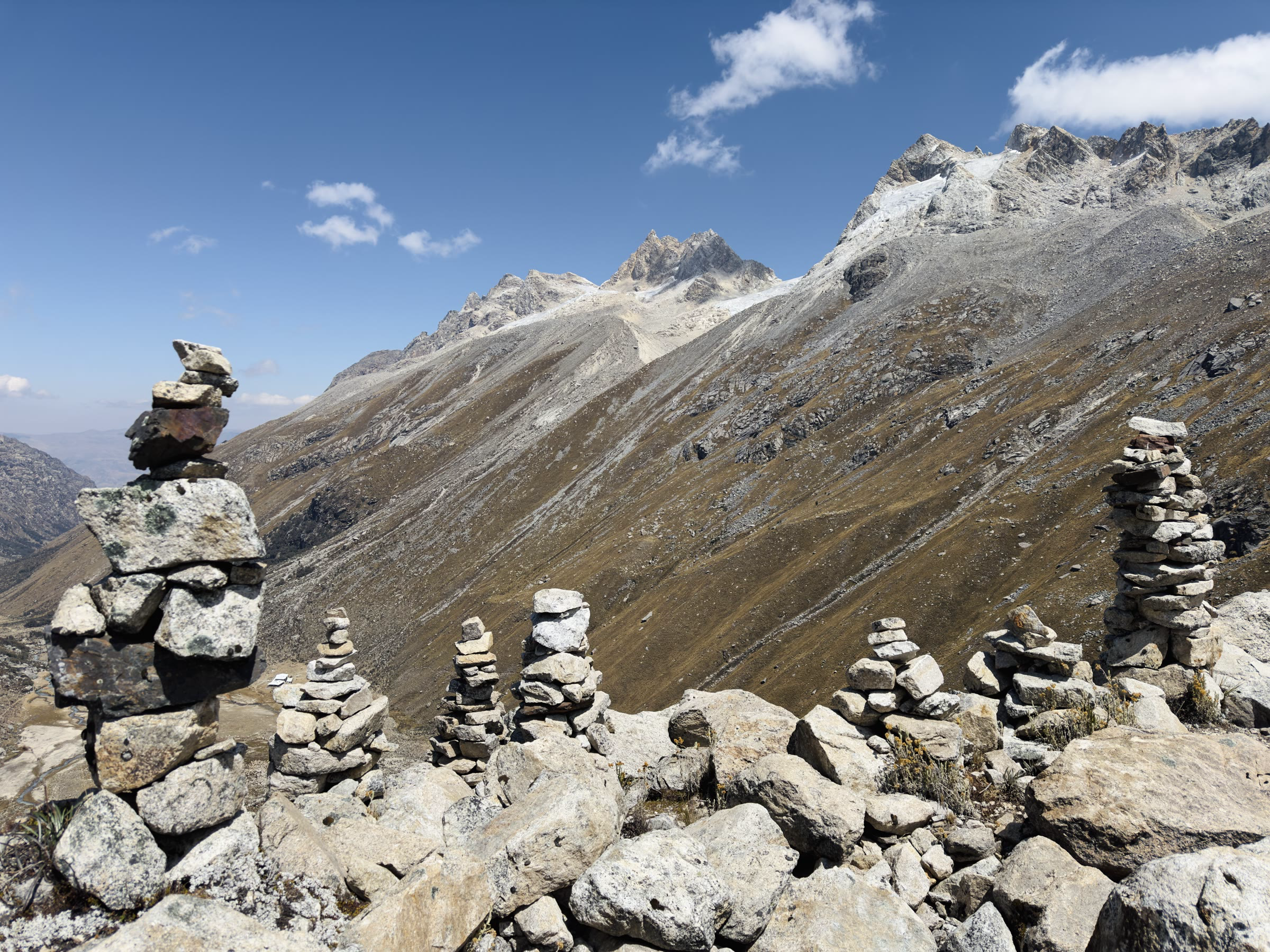
We hope and pray you are well and that the Lord is keeping you in perfect peace. For the past month we have been in Peru, working in the high Andes around Huaraz, beneath the peaks of the Cordillera Blanca, where Huascarán, Peru’s highest mountain, rises more than 22,000 feet over the valley. The air is thin, the roads are rough, and remote peoples still live in landscapes that remain virtually untouched. It is some of the most beautiful ground we have ever walked — and some of the most spiritually tangled. Traditional Catholicism has been woven together with ancestral worship, so that a saint’s statue is carried through the streets in the morning and an offering is laid in the earth for Pachamama by evening. Alongside our Gospel Expeditions, we are completing new episodes for release very soon, and we are excited to announce that Travel the Road is now streaming on EKKL, a new Christian streaming platform — one more door for these stories to reach new homes. None of this would be possible without you. Your prayers and your support are the lifeblood of Travel the Road, and every seed of the gospel we carry into these mountains and beyond has the potential to bear an eternal harvest.
Last month we wrote to you about Deep — the roots that hold a life standing when the storm comes. But a root can go deep and still share its ground with something that chokes it. Here in the Andes, we have seen what happens when people try to worship the living God and something else at the same time. And it is not only a problem in the mountains of Peru. It is also a problem in our homeland. This month’s theme is — Altars.
One God, One Altar
From the first page of the law to the last page of the prophets, God has never once agreed to share His worship. “Thou shalt have no other gods before me. Thou shalt not make unto thee any graven image… Thou shalt not bow down thyself to them, nor serve them: for I the LORD thy God am a jealous God.” — Exodus 20:3-5. That is not the jealousy of insecurity. It is the jealousy of a husband for his bride — the rightful claim of the One who made us, bought us, and loves us. “I am the LORD: that is my name: and my glory will I not give to another, neither my praise to graven images.” — Isaiah 42:8.
The heart of Israel’s confession was this: “Hear, O Israel: The LORD our God is one LORD.” Deuteronomy 6:4. One throne — not a pantheon with the God of Israel at the head of the table. Jesus put it plainly: “No man can serve two masters.” — Matthew 6:24. He did not say it was difficult. He said it was impossible. The question has never been whether God’s people worship Him. It is whether they worship Him alone.
Two Altars in the Andes
Walk the valleys around Huaraz and you will see what it looks like when a people try to answer that question with both. The patron of the city is the Señor de la Soledad, a carved image carried through the streets on the shoulders of the faithful, surrounded by bands, dancers, and candles. Men and women kneel before statues of saints, pray to them, kiss them, and bring them offerings. Then the same hands pour the first drops of a drink onto the ground for Pachamama, Mother Earth. Families still lay out despachos — bundles of coca leaves, seeds, and sweets — as offerings to the earth and to the apus, the spirits believed to dwell in the snow peaks overhead. Here the mountains are not simply admired. They are feared and appeased.

Understand what this is. It is not Christianity with a little paganism mixed in. Both altars are idolatry. The statue prayed to in the street is as much a graven image as the offering laid in the earth; one simply wears Christian clothing. It carries the names of saints and the shape of a cross, but it is exactly what Paul warned of: “Having a form of godliness, but denying the power thereof.” — 2 Timothy 3:5. The form remains. The faith has been forgotten.
Scripture saw this in ancient Samaria: “They feared the LORD, and served their own gods.” — 2 Kings 17:33. But read the very next verse, where God gives His own verdict: “Unto this day they do after the former manners: they fear not the LORD.” — 2 Kings 17:34. The people believed they were honoring God and their gods together. God said they were not honoring Him at all. A mixed altar is not half worship of God. It is no worship of Him. And it passes down: “both their children, and their children’s children: as did their fathers, so do they unto this day.” — 2 Kings 17:41. It is handed down like an heirloom until true faith is forgotten and idolatry has taken its place.
Stand in the thin air of these mountains and a psalm comes alive: “I will lift up mine eyes unto the hills, from whence cometh my help. My help cometh from the LORD, which made heaven and earth.” Psalm 121:1-2. The psalmist looked at the hills and refused to worship them. His help came from the One who made them. Idolatry bows to the creation. Worship bows to the Creator. Men “changed the truth of God into a lie, and worshipped and served the creature more than the Creator.” — Romans 1:25.
What an Idol Really Is
The modern mind smiles at idolatry as a relic of ancient history. Scripture never smiles at it. Isaiah describes a man who cuts down a tree, burns half of it to bake his bread, “and the residue thereof he maketh a god, even his graven image: he falleth down unto it, and worshippeth it, and prayeth unto it, and saith, Deliver me; for thou art my god.” Isaiah 44:17. Half the log cooks his dinner. The other half receives his prayers. And God’s verdict: “A deceived heart hath turned him aside, that he cannot deliver his soul, nor say, Is there not a lie in my right hand?” — Isaiah 44:20.
An idol cannot hear, see, or save. “They have mouths, but they speak not: eyes have they, but they see not… They that make them are like unto them; so is every one that trusteth in them.” — Psalm 115:5-8. You become what you worship. Bow to what is deaf and blind, and you grow deaf and blind to God.
But while the idol itself is nothing, what stands behind it is not nothing. “The things which the Gentiles sacrifice, they sacrifice to devils, and not to God: and I would not that ye should have fellowship with devils.” — 1 Corinthians 10:20. Every altar raised to anything other than the living God becomes a doorway, and the enemy is always glad to walk through an open door. A prayer offered to a statue of wood and paint, however sincere, gives to a carved image the devotion that belongs to Christ alone. “There is one God, and one mediator between God and men, the man Christ Jesus.” — 1 Timothy 2:5. The people of these mountains do not need another intercessor made with hands. They need the One who has nail prints in His.
The High Places of the West
It would be easy to look at the Andes and shake our heads. But the Christian West is not falling into paganism by one great leap. It is doing what the Andes did. It is blending. Piece by piece, the altars of other gods are being carried into Christian homes and churches and set up quietly beside the cross, and hardly anyone asks what they are.
Consider yoga. Millions of Christians practice it without a second thought, and some churches host it in their own buildings. But yoga was never a neutral fitness routine. It grew out of Hindu worship, and many of its postures are named for and patterned on Hindu gods the “warrior” pose for a fierce form of Shiva, the Sun Salutation as homage to Surya, the sun god. Believers who would never knowingly bow to a Hindu god are going through the very motions made for that worship, then closing with “Namaste,” a greeting that honors the divine believed to dwell in all things. The body is being taught a liturgy, and the soul follows the body more often than we admit.
And it does not stop there horoscopes, crystals, “manifesting,” and saying "the universe will provide," a Buddha statue in the garden as décor, interfaith services where the name of Jesus is carefully left out. Each piece is small. Together, they are an altar.a Buddha statue in the garden as décor, interfaith services where the name of Jesus is carefully left out. Each piece is small. Together, they are an altar.
Now the altars are rising in the open, in the very places we live. In Sugar Land, Texas, a ninety-foot statue of Hanuman now towers over the landscape, among the tallest statues in the United States. Satanic displays have been set up beside Nativity scenes in American state capitols. In a land founded by people who crossed an ocean to worship the God of the Bible, the church, which should be the first to grieve, has mostly fallen silent. We do not say this in hatred of any people every person who bows before those statues is someone for whom Christ died, and the missionary’s heart is to reach them. But love does not call an idol harmless. Love tells the truth about it.
God showed Ezekiel this very thing. In a vision of the temple, at the gate of God’s own house, stood “the image of jealousy, which provoketh to jealousy,” while the elders of Israel burned incense to carved images in the dark. “Son of man, hast thou seen what the ancients of the house of Israel do in the dark… for they say, The LORD seeth us not.” Ezekiel 8:3, 12. The tragedy was not that the pagans had idols. The pagans always had idols. The tragedy was that God’s own people had brought them into God’s own house. That is where the West stands now abasing the name of God in the very homeland that once carried His name to the ends of the earth. “Hath a nation changed their gods, which are yet no gods? but my people have changed their glory for that which doth not profit.” Jeremiah 2:11. A nation that trades the living God for a crowd of lesser ones does not become more open-minded. It becomes empty, and empty ground does not stay empty for long.
Turning to the Living God
It is time for the church to stop handling idolatry with kid gloves and see it for the seriousness of what it is. God never treats it as a harmless habit. He calls it spiritual adultery — the bride of Christ giving her affection to another.
When God raised up Gideon to deliver Israel, the first thing He dealt with was not the enemy army. It was the altar of Baal in Gideon’s own father’s house (Judges 6:25). Before God used him in public, He cleaned house in private. That is always where it begins not with someone else’s temple, but with our own homes and our own hearts.
Paul described the believers at Thessalonica in one sentence that should describe every church: “Ye turned to God from idols to serve the living and true God.” — 1 Thessalonians 1:9. Turning from idols and turning to God is one motion, not two. So we ask you, with love and urgency: what is standing beside the cross in your home? What practice, object, or habit have you allowed in without asking what god it was first made for? “What agreement hath the temple of God with idols?” — 2 Corinthians 6:16. None. John closed his first letter simply: “Little children, keep yourselves from idols.” — 1 John 5:21.
The choice Joshua set before Israel is the same one set before the Andes, before the West, and before every one of us today: “Choose you this day whom ye will serve… but as for me and my house, we will serve the LORD.” — Joshua 24:15.
God does not share an altar.
At Travel the Road, we have seen people who once worshipped the land and bowed to idols come to know the living God. We have seen the sick healed and the demon-possessed set free. The gospel goes forward in strength and power, and no idol can stand in its way, because there is no name like the name of Jesus. “Neither is there salvation in any other: for there is none other name under heaven given among men, whereby we must be saved.” — Acts 4:12.
We ask you to stand with us. Pray for these highland communities, that the Spirit would open eyes to see the difference between the Creator and His creation. Pray for protection, wisdom, and open doors as we press forward. Watch for our new episodes coming soon. And please consider supporting this work financially, whether through a one-time gift or a new monthly commitment. Your giving puts us on the ground, keeps the episodes coming, and carries the name of Jesus into places where other altars still stand. We could not do any of it without you. Thank you for always being there for us. Peace be with you.
In Him,
Tim and Will