
What Holds the Tree Up
Walk into any forest after a great storm and you will find the same thing on the ground: not the smallest trees, but often some of the tallest. The ones that reached highest and grew fastest, the ones that looked the most impressive against the sky — these are frequently the ones lying on their side with their roots torn out of the earth, because they spent all their strength climbing and never sent anything down. The storm does not measure the height of a tree. It measures the depth.
Scripture's picture of the blessed man is never one who grows fast. It is one who grows down. "His delight is in the law of the Lord; and in his law doth he meditate day and night. And he shall be like a tree planted by the rivers of water, that bringeth forth his fruit in his season; his leaf also shall not wither." — Psalm 1:2-3. Planted. Rooted. Fed by an unseen stream. And Jeremiah paints the same tree with the storm already in view: "Blessed is the man that trusteth in the Lord... for he shall be as a tree planted by the waters, that spreadeth out her roots by the river, and shall not see when heat cometh... neither shall cease from yielding fruit." — Jeremiah 17:7-8. The drought comes. The heat comes. And the deep-rooted tree does not even notice, because its life is not drawn from the weather. It is drawn from the water it reached long before the sky went dry.
This is God's design for every believer. "Rooted and built up in Him, and stablished in the faith." — Colossians 2:7. "That ye, being rooted and grounded in love." — Ephesians 3:17. The Word is always the same. Before God builds anything up, He sends something down.
The Root Is the Word
And here is what must be said plainly, because everything else in this letter depends on it: the root is the Word of God. There is no other. "So then faith cometh by hearing, and hearing by the Word of God." — Romans 10:17. Faith does not come by experience. It does not come by feeling. It does not come by novelty or atmosphere or the emotional pull of a well-produced moment. It comes by hearing, and hearing by the Word — and a faith rooted in anything else is a faith rooted in nothing that will hold when the ground begins to shake.
Jesus told of a seed that sprang up quickly and withered just as fast, "because it had no root." — Luke 8:13. Fast growth, no depth, no survival. It is the most honest diagnosis of shallow Christianity ever given, and it was given by the Lord Himself.
Look at the men and women God used, and you will find the same foundation under every one of them. Before Joshua ever set foot in the Promised Land, before a single wall fell, God gave him one instruction: "This book of the law shall not depart out of thy mouth; but thou shalt meditate therein day and night... for then thou shalt make thy way prosperous, and then thou shalt have good success." — Joshua 1:8. Not strategy first. The Word first. Ezra "prepared his heart to seek the law of the Lord, and to do it, and to teach it" — Ezra 7:10 — in that order, seeking before doing, doing before teaching. The Bereans were called noble because they "searched the scriptures daily" — Acts 17:11. Timothy knew "the holy scriptures" from a child (2 Timothy 3:15). David said, "Thy word have I hid in mine heart, that I might not sin against thee." — Psalm 119:11. And the Lord Jesus, standing in the wilderness with the enemy in His face, answered every temptation with the same three words: "It is written." — Matthew 4.
Not one of them built on themselves. They built on the Word until the Word became root — until it was no longer something they consulted, but something they were made of.
The Old Paths: Trends Are Not Traditions
Now we come to the heart of it, and it requires a distinction the modern church has almost entirely lost. God said through Jeremiah: "Stand ye in the ways, and see, and ask for the old paths, where is the good way, and walk therein, and ye shall find rest for your souls." — Jeremiah 6:16. The old paths. The good way. Rest for the soul is found not in the newest road but in the ancient one.
We have been taught to hear the word tradition as a slur — as if anything old must be dead, as if faithfulness to what came before is the same as backwardness. But that is not what Scripture teaches. A good tradition is nothing more than the faithful handing-down of the truth from one generation to the next, and Paul commends it without apology: "Hold the traditions which ye have been taught, whether by word, or our epistle." — 2 Thessalonians 2:15. "Keep the ordinances, as I delivered them to you." — 1 Corinthians 11:2. What the Lord condemned was never the faithful handing-down of His Word. It was the traditions of men raised up to cancel the commands of God: "Making the Word of God of none effect through your tradition." — Mark 7:13. There is a world of difference between a tradition that carries the Word forward and a tradition that buries it. One is a river. The other is a dam.
But a trend is a third thing altogether, and it is neither the Word nor a faithful tradition. A trend is the fashion of the world, borrowed and given a Christian coat of paint. And the modern church has developed an almost compulsive need to chase them — a restless conviction that the faith must be constantly reinvented, rebranded, and repackaged to stay relevant, or it will be left behind. This instinct has done enormous damage. Because when the church builds itself on the shifting fashions of the culture, it does not transform the culture. It replicates it. It produces a gospel that looks exactly like the world it was sent to save, and a mirror has never rescued anyone. "And be not conformed to this world: but be ye transformed by the renewing of your mind." — Romans 12:2. Transformed, not conformed. The church was never called to imitate the world at a slightly slower pace. It was called to be a different thing entirely.
The bitter irony is that in chasing relevance, the church made itself irrelevant. A world drowning in novelty does not need one more voice offering the same restless reinvention it can find anywhere. It needs the one ancient thing that never moves. And in cutting itself loose from the old paths, the church cut itself loose from the only ground where rest was ever found.
This is where loyalty must be recovered as a Christian virtue. Not loyalty to a style or a decade or a personal preference — loyalty to Christ and to His unchanging Word while the world changes its mind every season. "It is required in stewards, that a man be found faithful." — 1 Corinthians 4:2. Faithfulness over novelty. Steadfastness over reinvention. Deep roots are not a weakness to apologize for. They are the difference between a tree and a memory.
Europe: A Continent That Cut Its Own Roots
We do not have to imagine what happens to a church that abandons its roots. We can look at a continent. To the church at Ephesus the risen Christ said, "I have somewhat against thee, because thou hast left thy first love." — Revelation 2:4. That single sentence is now the epitaph of Europe.
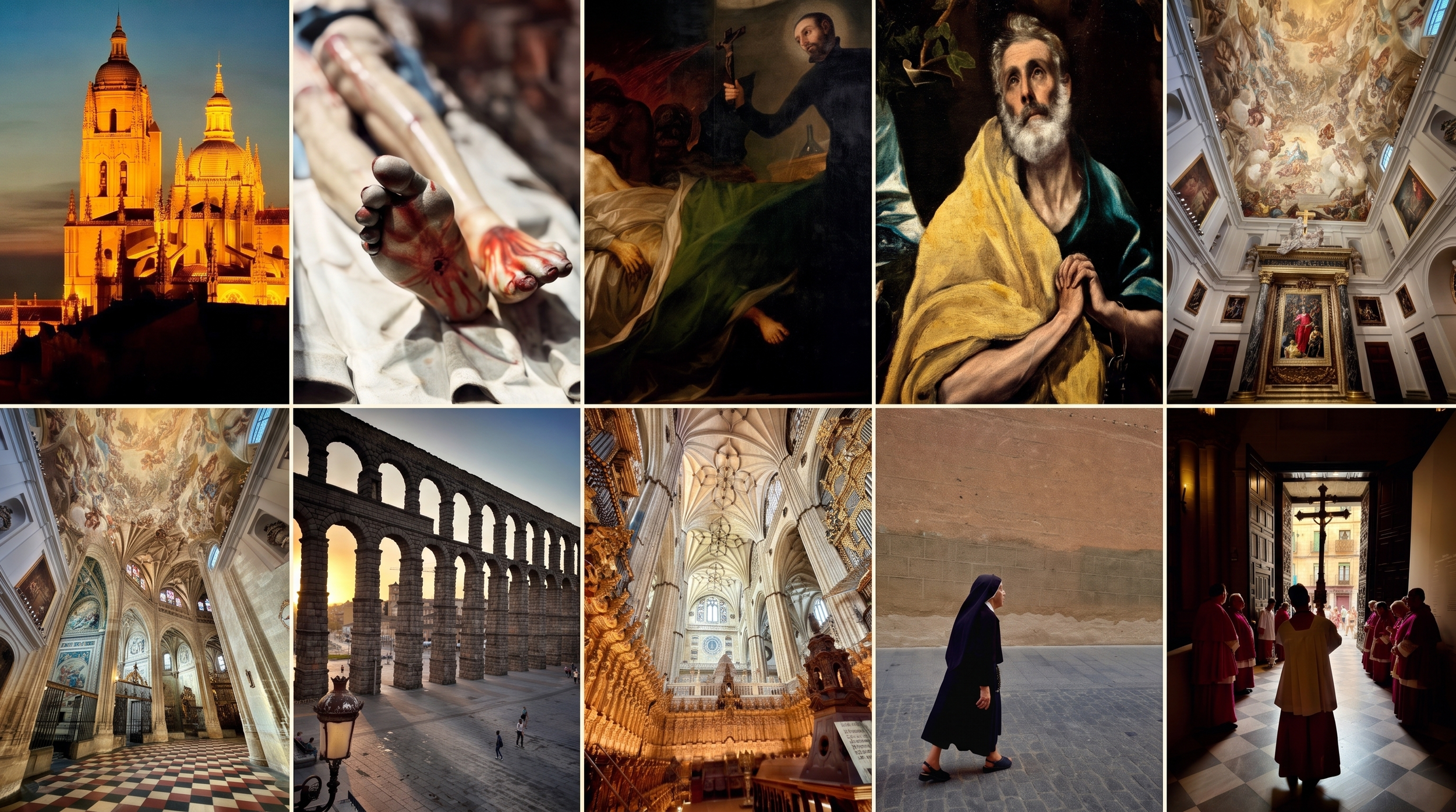
Understand what was lost. In the 1800s and into the early 1900s, Europe was the launching pad of the greatest missionary movement the world had ever seen. From England, William Carey went to India and lit a fire; Hudson Taylor buried himself in the interior of China; David Livingstone walked into the heart of Africa and never came home. From Germany and the Moravian lands, believers went out as living sacrifices — some famously selling themselves into slavery to reach the enslaved with the gospel. From the Netherlands and across the Protestant nations came the theologians, the translators, the preachers, and the sending societies that carried the name of Jesus to the ends of the earth. These were not comfortable men. They were deep-rooted men — grounded in the Word before they were sent by it — and God shook the nations through them.
And then Europe left its first love. It did not lose its faith to an invading army. It let go of it from within — traded the Word for the applause of the intellect, traded the cross for the approval of the age — and into the empty ground where deep Christianity had once stood, a new growth came up: liberalism, atheism, communism, humanism and anti-christian sentiment. The sickness is visible now to anyone who walks the streets. A dying culture surrounds the empty cathedrals — a continent that kept the buildings and lost the God, that still has the architecture of faith and none of the root. The stone endures. The steeples still reach for a heaven the culture no longer believes in.
A tree that cuts its own roots does not fall the same afternoon. That is the deception. It stays standing for a time — still tall, still beautiful, still photographed by tourists — while underground it is already dead. Then the storm comes, and there is nothing left to hold it, and a continent that was the hope of the nations becomes a warning to them. And let no American reading this feel safe, because the United States is being tested on the very same point, and the erosion is already well underway.
Go Deep
So what is the answer to a shallow, dying, reinvented church? It is not a newer gospel. It is the ancient one, gone deeper. Not another reinvention, but a return. Stand in the ways. Ask for the old paths. Get into the Word of God until the Word of God gets into you — until it stops being a book you read and becomes the root you grow from. Be loyal to Christ and to the truth that has never once needed updating, while the world exhausts itself chasing a relevance it will never catch.
The God who raises men off the ash heap is still planting trees of righteousness, and roots go down best in broken-open ground. The tree that survives the storm is not the tallest. It is the deepest. Sink your roots where the ground has never moved.
In Him,
Tim and Will