
Dear Friends,
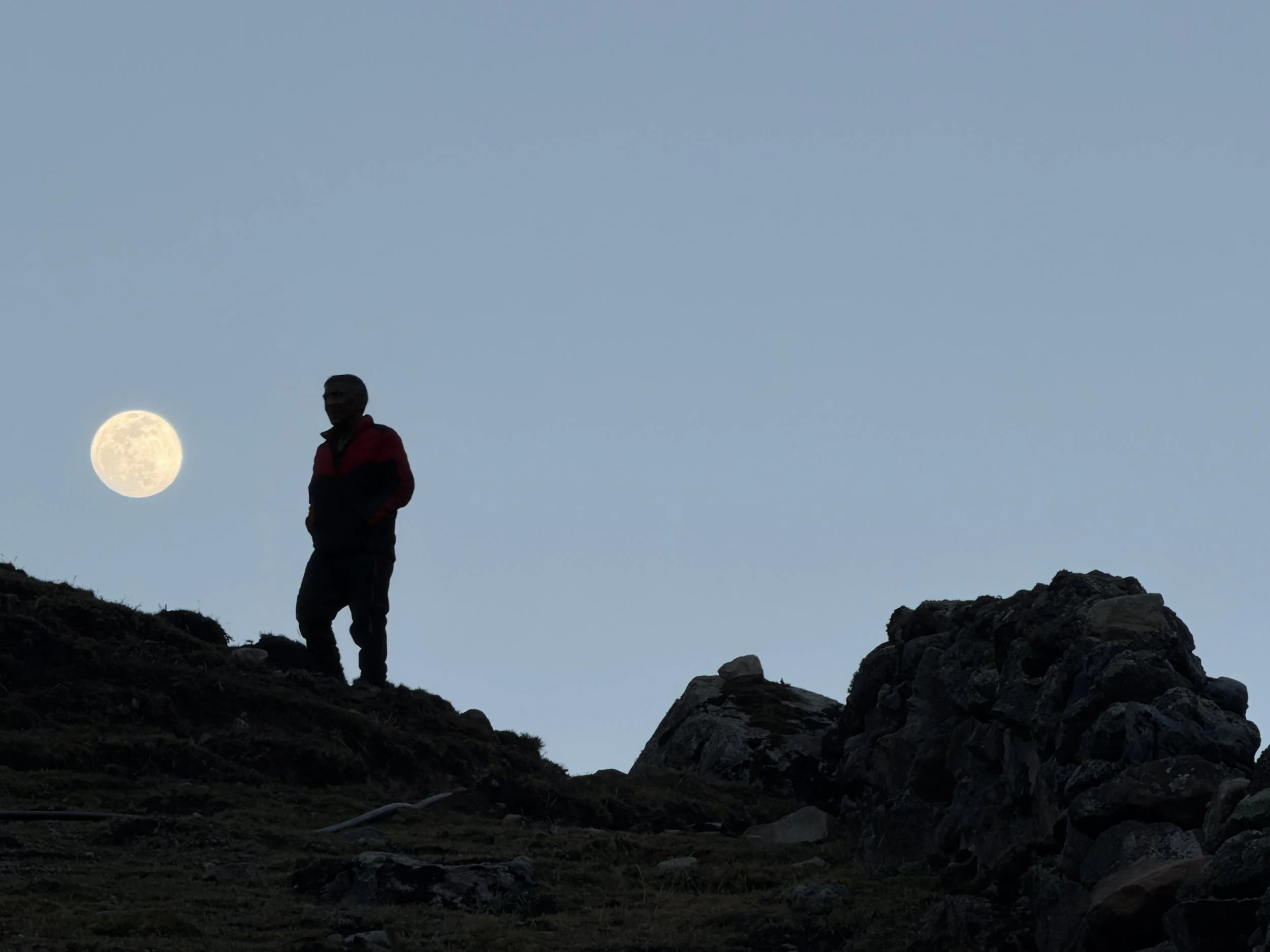
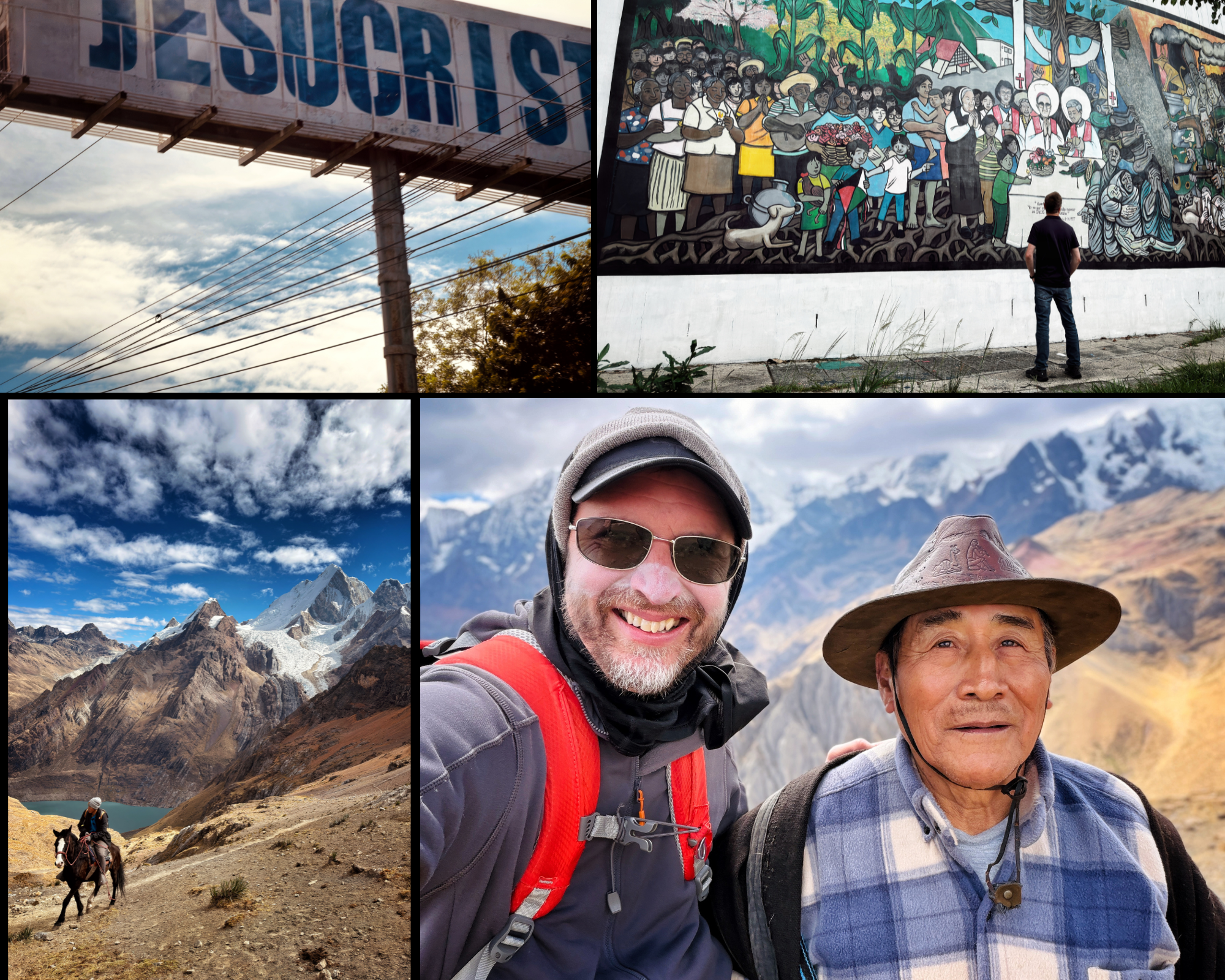
Greetings in the Lord. We hope and pray you are well and that the Lord is keeping you in perfect peace. As we write this, we have just come out of a month in remote places in Peru and El Salvador — from the high mountain villages of the Andes to the volcanic highlands of a small nation once known as one of the most dangerous places on earth. We will tell you more about what we saw there below, because it speaks directly to this month's message. Now we are back from the field and hard at work on the production of multiple episodes that will be released soon. We cannot wait to put them in your hands and carry you into these places with us.
None of this happens without you. Your prayers and your support are the lifeblood of Travel the Road. They put boots on mountain trails, cameras in remote villages, and the gospel in places where the name of Jesus is rarely spoken. Every seed planted on these roads has the potential to bear an eternal harvest, and you plant it with us.
Last month we wrote to you about Altars — the false places of worship that still stand in the Andes and in the West. This month we follow that thought to its hardest question. When the culture raises its image, the music begins to play, and everyone around you goes to their knees, what will you do? This month's theme is — Stand.
The Image on the Plain of Dura
Nebuchadnezzar built an image of gold ninety feet high and set it up on the plain of Dura (Daniel 3:1). Then he summoned every official in the empire — princes, governors, captains, judges, treasurers, counsellors — and a herald cried out the terms: "At what time ye hear the sound of the cornet, flute, harp, sackbut, psaltery, dulcimer, and all kinds of music, ye fall down and worship the golden image that Nebuchadnezzar the king hath set up." — Daniel 3:5. Beside the image stood the furnace (Daniel 3:6).
Notice what Babylon did not ask. It did not demand that anyone renounce their own gods. Babylon was tolerant of every god under heaven. It asked for one thing only: one public moment, one bow, at one signal, in front of everyone. And notice how the pressure came. Not through argument, but through atmosphere — the music swelling, the crowd moving as one. "All the people, the nations, and the languages, fell down and worshipped the golden image." — Daniel 3:7. The image never had to win a debate. It only needed everyone else to bow.
And in that sea of bent backs, three young men stayed on their feet. Shadrach, Meshach, and Abednego had already lost almost everything Babylon could take. They had been carried out of Jerusalem as captives, stripped of their Hebrew names (Daniel 1:7), and retrained in the language and learning of the Chaldeans (Daniel 1:4). Babylon took their homeland, their names, and their education. It could not take their knees. They knew the command of their God: "Thou shalt not bow down thyself to them, nor serve them: for I the Lord thy God am a jealous God." — Exodus 20:5.
But If Not
The Chaldeans ran to the king, and the three were dragged before the most powerful man on earth. Nebuchadnezzar offered them a second chance. One more song. One more signal. One small bow, and all would be forgiven. Their answer is one of the most fearless sentences ever spoken by human lips:
"O Nebuchadnezzar, we are not careful to answer thee in this matter. If it be so, our God whom we serve is able to deliver us from the burning fiery furnace, and he will deliver us out of thine hand, O king. But if not, be it known unto thee, O king, that we will not serve thy gods, nor worship the golden image which thou hast set up." — Daniel 3:16-18
We are not careful to answer thee. No negotiation. No clever compromise. No request for a private exemption. They did not need time to think it over, because the decision had been made long before the music started.
Then comes the confession: Our God is able, and He will deliver us. That is faith in the power of God. But the next three words are faith in the character of God: But if not. Their obedience did not depend on the outcome. They were not bargaining with God, offering to stand on the condition that He kept them from the fire. They would stand whether He rescued them or not, because He is God and the image is not. A faith that only obeys when deliverance is guaranteed has already bowed in its heart. A faith that says but if not cannot be bought, because it was never for sale.
This is the same spirit that filled the apostles when the council commanded them to be silent: "We ought to obey God rather than men." — Acts 5:29. It is the same spirit that lived in Mordecai when every servant at the king's gate bowed before Haman, and he "bowed not, nor did him reverence" — Esther 3:2. Every generation has its image. Every generation has its few who will not bend.
The Fourth Man in the Fire
Nebuchadnezzar was so full of fury that "the form of his visage was changed" (Daniel 3:19). He ordered the furnace heated seven times hotter than usual. The flames were so violent that they killed the soldiers who threw the three men in (Daniel 3:22). By every human measure, the story was over.
Then the king leapt to his feet. "Did not we cast three men bound into the midst of the fire? … Lo, I see four men loose, walking in the midst of the fire, and they have no hurt; and the form of the fourth is like the Son of God." — Daniel 3:24-25
Read it slowly. Three men went in bound, and four men walked in the fire loose. The only thing the furnace burned was the ropes. God did not keep His servants out of the fire. He met them in it. And the One who stood beside them was no ordinary messenger. The king himself saw it: the form of the fourth was like the Son of God. Nebuchadnezzar would later call Him God's angel (Daniel 3:28) — the Angel of the Lord, whom believers through the ages have understood to be the Lord Himself, appearing before He took on flesh. He stepped into the furnace with the three who would not bow — the same Lord who would one day walk into the fire of judgment at Calvary in our place.
When they came out, the princes and governors gathered around to inspect them. "Upon whose bodies the fire had no power, nor was an hair of their head singed, neither were their coats changed, nor the smell of fire had passed on them." — Daniel 3:27. Not a hair. Not the smell of smoke.
Here is the truth every believer must settle before the music starts: the one who refuses to bow is never left to stand alone. The crowd will be on its knees. The furnace may be real. But there will be a fourth Man in the fire. "I will never leave thee, nor forsake thee." — Hebrews 13:5.
The Bow Being Asked of Us Today
The image has changed its shape, but the demand has not. Our modern Babylon is tolerant of almost every belief. You may keep your faith, it says — privately, quietly, in your home and in your church on Sunday. All it asks is the public bow — and the world is very clear about what that bow looks like. It tells the Christian: celebrate what God calls sin. Agree that what God calls holy is outdated and hateful. Keep quiet about Jesus being the only way to the Father. Let us teach your children whatever we choose, and say nothing. And the music is always playing — entertainment, media, the scroll of the phone, the approval of the room. The pressure rarely comes as a threat. It comes as the feeling that everyone else is already kneeling.
Here is the hard word: much of the modern church has bowed. Not by renouncing Christ in so many words, but by a polite bend at the waist. The pulpit that no longer says sin. The believer who goes quiet at work so as not to make anyone uncomfortable. The ministry that softens the cross to keep the crowd. None of them would call it worship of the image. But the king on the plain of Dura did not care what anyone called it. He only cared that they went down.
The enemy has always understood the power of one small bow. When he took Jesus to an exceedingly high mountain and showed Him all the kingdoms of the world and their glory, the price he named was simple: "All these things will I give thee, if thou wilt fall down and worship me." Jesus did not negotiate. "Get thee hence, Satan: for it is written, Thou shalt worship the Lord thy God, and him only shalt thou serve." — Matthew 4:9-10. Every compromise the world offers you is that same offer, made smaller.
And if you feel alone in standing, remember what God told Elijah when he believed he was the last faithful man in Israel: "Yet I have left me seven thousand in Israel, all the knees which have not bowed unto Baal." — 1 Kings 19:18. You are not the only one standing on that plain. You simply cannot see the others yet.
A Nation That Refused to Bow
We saw a picture of this on the road last month. Not long ago, El Salvador was a nation on its knees before the gangs. MS-13 and Barrio 18 — gangs born on the streets of Los Angeles — ruled whole neighborhoods. Bus drivers, shopkeepers, and farmers paid extortion or paid with their lives. In 2015 the country recorded more than a hundred murders for every hundred thousand people, the highest rate in the world. Families fled north by the hundreds of thousands, because staying meant bowing to the gang.
Then the nation decided it would bow no longer. Beginning in 2022, El Salvador went after the gangs with everything it had. In 2025, the government reported just 82 homicides for the entire year — a country that was once the murder capital of the world is now counted among the safest in the hemisphere. We walked through towns that, only a few years ago, few outsiders would have dared to enter. Today the shops are open, the streets are alive, the law is followed, and ordinary people are free to work, build, and prosper. A civil society was taken back in a few short years.
Scripture tells us exactly why this matters: "Because sentence against an evil work is not executed speedily, therefore the heart of the sons of men is fully set in them to do evil." — Ecclesiastes 8:11. God ordained governing authority for this very purpose. The ruler "is the minister of God to thee for good. But if thou do that which is evil, be afraid; for he beareth not the sword in vain." — Romans 13:4. When justice is done, the people breathe again: "When the righteous are in authority, the people rejoice: but when the wicked beareth rule, the people mourn." — Proverbs 29:2.
Now look at home. In too many American cities, the opposite has become normal. We release the criminal and point the finger of guilt at the innocent. The man who defends his family is put on trial while the one who broke in walks free. We tax the diligent and reward the idle, though Scripture is plain: "If any would not work, neither should he eat" (2 Thessalonians 3:10), and "the hand of the diligent maketh rich" (Proverbs 10:4). God has a word for a society that turns justice upside down: "He that justifieth the wicked, and he that condemneth the just, even they both are abomination to the Lord." — Proverbs 17:15. And another: "Woe unto them that call evil good, and good evil." — Isaiah 5:20.
America did not lose its moral compass to an invading gang. It lost it one bow at a time — bowing to the lie that evil is normal, that right and wrong are a matter of opinion, that the God who founded our moral order can be quietly set aside. A nation always bows in its heart long before it falls in the street. But hear the hope in this: if a nation as broken as El Salvador could turn in a few short years, no nation is beyond turning. And Scripture tells us exactly where the turning begins — not in the halls of government, but with God's own people: "If my people, which are called by my name, shall humble themselves, and pray, and seek my face, and turn from their wicked ways; then will I hear from heaven, and will forgive their sin, and will heal their land." — 2 Chronicles 7:14. "Righteousness exalteth a nation: but sin is a reproach to any people." — Proverbs 14:34.
Take Your Stand
Do not miss how the story of the plain of Dura ends. The king who built the image, heated the furnace, and demanded the bow ended by blessing the God of the three men who refused him. "Blessed be the God of Shadrach, Meshach, and Abednego, who hath sent his angel, and delivered his servants that trusted in him, and have changed the king's word, and yielded their bodies, that they might not serve nor worship any god, except their own God." — Daniel 3:28. Three young men, captives in a foreign land, changed the word of the most powerful king on earth. A decree went out across the empire protecting the worship of the God of Israel (Daniel 3:29), and the three who would not bow were promoted in the province of Babylon (Daniel 3:30).
That is what standing does. The crowd that bows changes nothing. The few who stand change the law of the land. Never believe the lie that your stand is too small to matter. God has always turned nations through a handful of people who refused to go down when the music played.
And understand this: the believer who stands is not a proud believer. The reason Shadrach, Meshach, and Abednego could stand before the image is that they had already bowed before their God. We bow to one King. And one day every knee will: "That at the name of Jesus every knee should bow, of things in heaven, and things in earth, and things under the earth; and that every tongue should confess that Jesus Christ is Lord, to the glory of God the Father." — Philippians 2:10-11. Every image this world has ever raised will one day lie on the ground before Him. The only question is which side of that day you want to be found standing on.
So stand. At work, at school, in your family, in your church, in the public square. Stand with love, but stand. Settle it now, before the music starts, so that when it comes you are not careful to answer. Bow before God, and you will never have to bow before anything else. Let the whole plain bow. You stay standing.
At Travel the Road, we have stood beside believers who would not bow. In nations where confessing Christ can cost a job, a family, or a life, we have sat with men and women who counted the cost and stayed on their feet. And we have seen the fourth Man in the fire with them — the sick healed, chains broken, protection in places of real danger, and above all, souls passing from death into life. In nearly thirty years on the road, we have learned that the God who walked in Nebuchadnezzar's furnace still walks with those who will not bend.
Now, as we work to release new episodes before the year is out, and as we prepare for the Gospel Expeditions ahead, we ask you to stand with us. Pray for open doors, for protection, for wisdom, and for hearts made ready by the Spirit before we ever arrive. And as this year draws to a close, please consider a special year-end gift or a new monthly commitment. Your giving is what puts us on the ground, what finishes these episodes, and what carries the gospel to every tribe, tongue, and nation. We could not do any of it without you. Thank you for always being there for us. Peace be with you.
In Him,
Tim & Will