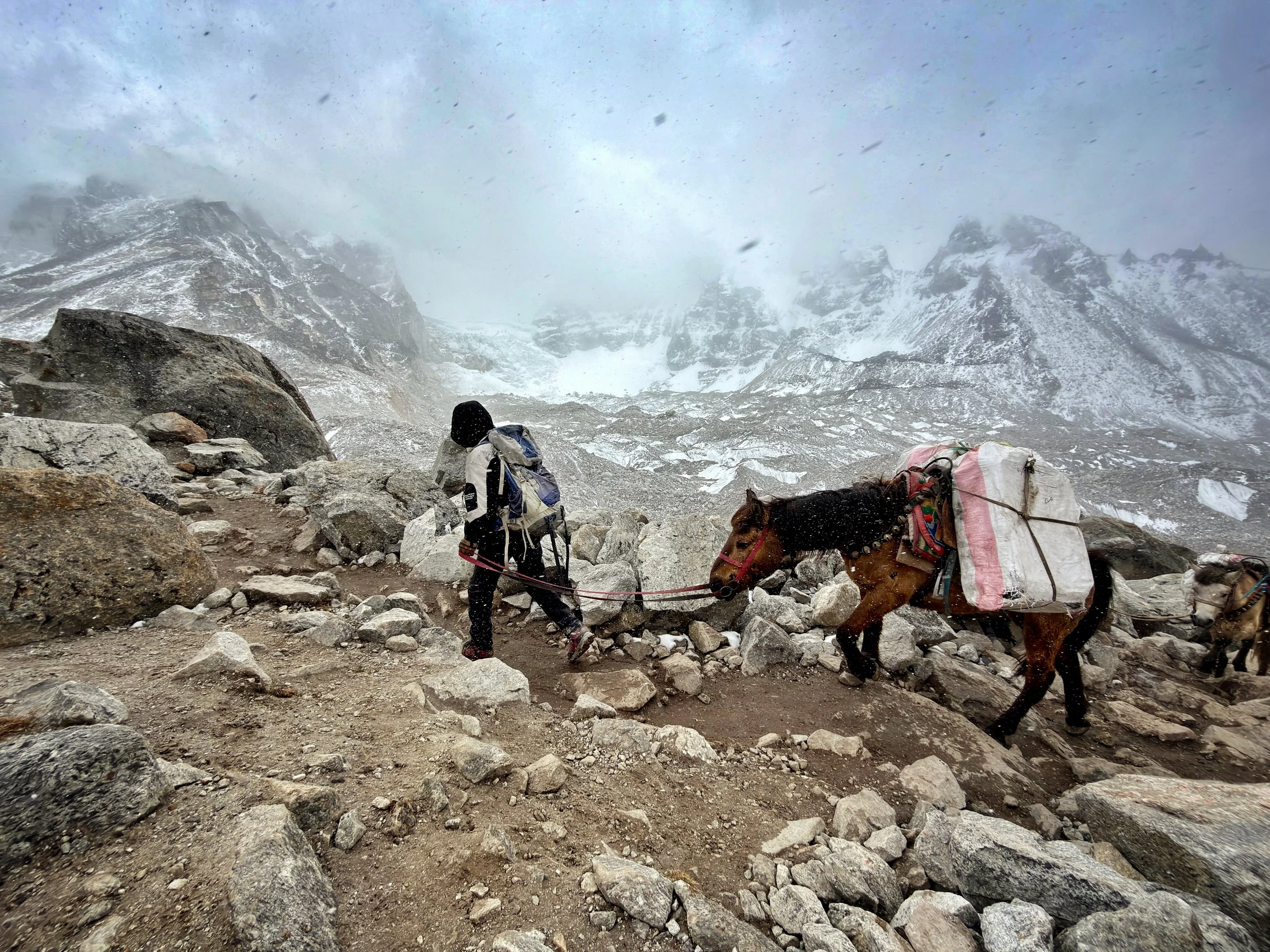
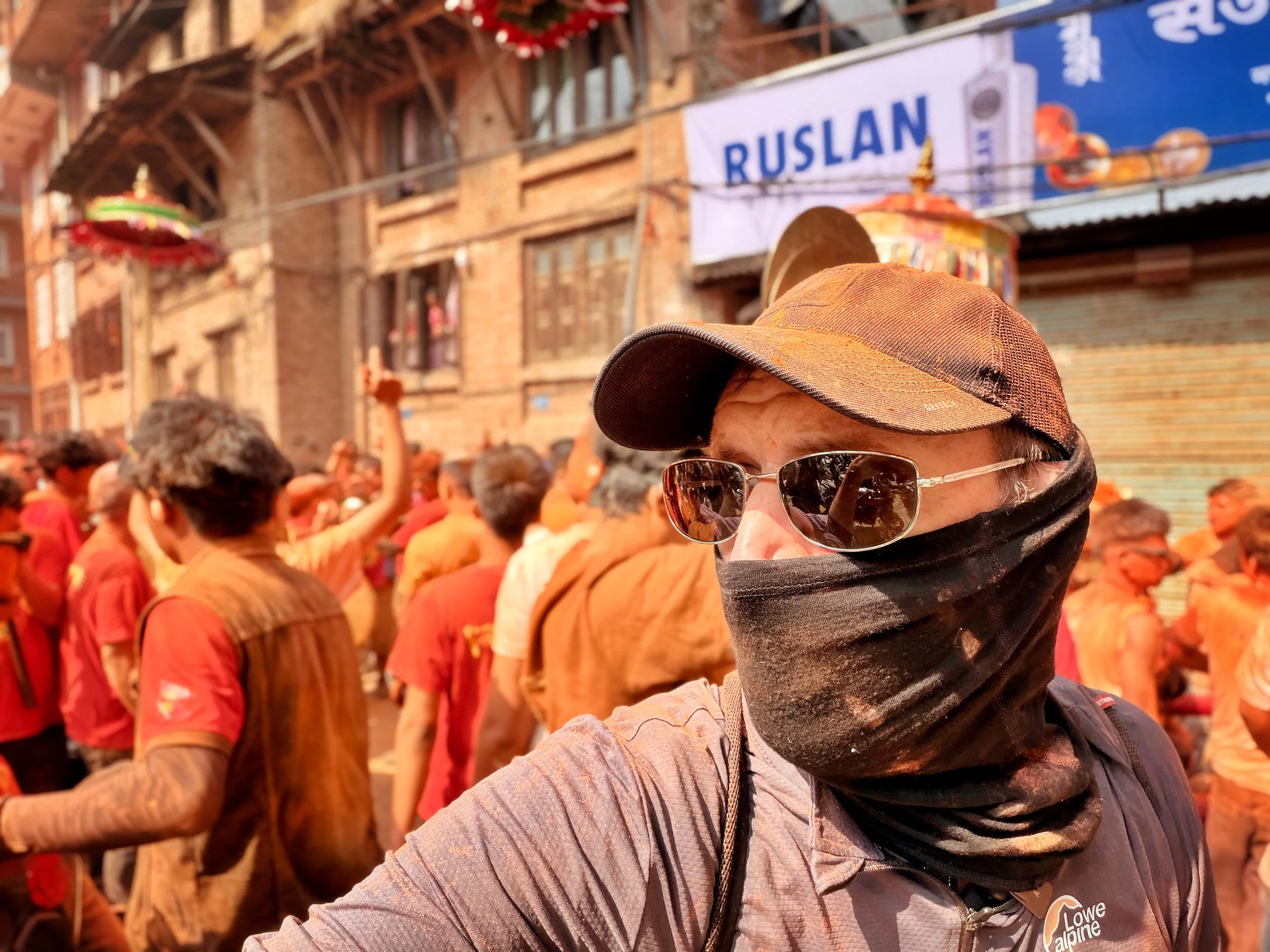



Upon our arrival in Vietnam we visited the prison know as the Hanoi Hilton. [vimeo http://vimeo.com/26542922]
Video shot and edited on cell phone.

There is a posture that God invites every believer into — and most of us spend our entire lives fighting it. Not because we are wicked or faithless, but because the world has trained us, from our very first breath, to grip things tightly. To scheme, to strive, to press, to worry, to manufacture outcomes through sheer force and anxiety. The world calls this wisdom. And it has produced in the hearts of God’s people a deep, chronic, soul-wearying strain that was never part of His original design for us.
Jesus said it plainly, without qualification, to people living in conditions far more precarious than most of us will ever face: “Do not worry about your life.” — Matthew 6:25.
There is a thread that runs through all of Scripture — a pattern so consistent that once you see it, you cannot unsee it. It is not the pattern the world expects. It is not the pattern even the religious establishment of any given era expected. It is this: God does not choose the way man chooses. He does not select the powerful, the credentialed, the connected, or the ones whose résumé impresses the room. He reaches past the inner circle, past the halls of influence, past the people who have built their identity on being in — and He finds the one standing at the edges. The outsider. And He changes the world through them.
Here is a hard truth that must be spoken: a large portion of the modern church has grown deeply, profoundly, tragically ashamed of the gospel. Not ashamed in so many words. No one stands at a pulpit and announces that they find the cross embarrassing. But the evidence is visible in what is preached — and far more in what is not. The blood of Christ has been quietly removed from the vocabulary of too many congregations. Sermons about sin, judgment, and hell have been replaced with messages designed to comfort, entertain, and above all, not offend. The thunderous warning from 2 Timothy is being fulfilled in real time: “For the time will come when people will not put up with sound doctrine. Instead, to suit their own desires, they will gather around them a great number of teachers to say what their itching ears want to hear.” — 2 Timothy 4:3.
The battle we face is not primarily political, social, or economic. It is not fought with weapons that can be seen or measured by human instruments. The conflict that defines the Christian life takes place in a realm invisible to the natural eye — a dimension where principalities and powers, thrones and dominions, wage war against the souls of mankind. Scripture pulls back the curtain on this invisible conflict with startling clarity in Ephesians that our struggle is “Not against flesh and blood, but against principalities, against powers, against the rulers of the darkness of this age, against spiritual hosts of wickedness in the heavenly places” — Ephesians 6:12. Notice the plural — not one enemy, but organized forces. Not localized skirmishes, but systemic warfare across a spiritual geography that spans “the heavenly places.” This is not a metaphor. This is not poetic language meant to inspire. This is literal spiritual reality. Every believer lives embedded in a war zone. Every decision, every prayer, every step of obedience either advances the kingdom of darkness or advances the kingdom of light. There is no neutrality. There is no middle ground. Jesus Himself confirmed this reality when He addressed the seventy disciples upon their return: “I saw Satan fall like lightning from heaven.” — Luke 10:18. The adversary was not defeated by human strategies or institutional power. He fell because of the authority delegated by Christ Jesus.
Burdens are a universal reality, but the gospel reveals a stunning truth: we were never created to carry them alone. The heaviest burden of all — our sin and separation from God — has been lifted once and for all at the cross of Christ, and the same Jesus who bore our iniquity now invites us to lay every care, fear, and anxiety at His feet.
Upon our arrival in Vietnam we visited the prison know as the Hanoi Hilton. [vimeo http://vimeo.com/26542922]
Video shot and edited on cell phone.
The Death Side. In sanctification God has to deal with us on the death side as well as on the life side. Sanctification requires our coming to the place of death, but many of us spend so much time there that we become morbid. There is always a tremendous battle before sanctification is realized— something within us pushing with resentment against the demands of Christ. When the Holy Spirit begins to show us what sanctification means, the struggle starts immediately. Jesus said, “If anyone comes to Me and does not hate . . . his own life . . . he cannot be My disciple” (Luke 14:26).
In the process of sanctification, the Spirit of God will strip me down until there is nothing left but myself, and that is the place of death. Am I willing to be myself and nothing more? Am I willing to have no friends, no father, no brother, and no self-interest— simply to be ready for death? That is the condition required for sanctification. No wonder Jesus said, “I did not come to bring peace but a sword” (Matthew 10:34). This is where the battle comes, and where so many of us falter. We refuse to be identified with the death of Jesus Christ on this point. We say, “But this is so strict. Surely He does not require that of me.” Our Lord is strict, and He does require that of us.
Am I willing to reduce myself down to simply “me”? Am I determined enough to strip myself of all that my friends think of me, and all that I think of myself? Am I willing and determined to hand over my simple naked self to God? Once I am, He will immediately sanctify me completely, and my life will be free from being determined and persistent toward anything except God (see 1 Thessalonians 5:23-24).
When I pray, “Lord, show me what sanctification means for me,” He will show me. It means being made one with Jesus. Sanctification is not something Jesus puts in me— it is Himself in me (see 1 Corinthians 1:30).
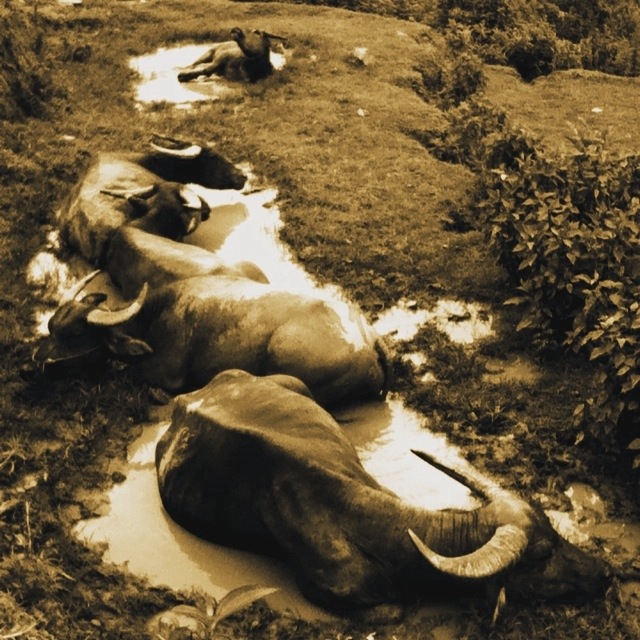
In Sapa Vietnam. Photos taken today in the fields and on 10km walk through Hmong villages.


Beware of thinking of our Lord as only a teacher. If Jesus Christ is only a teacher, then all He can do is frustrate me by setting a standard before me I cannot attain. What is the point of presenting me with such a lofty ideal if I cannot possibly come close to reaching it? I would be happier if I never knew it. What good is there in telling me to be what I can never be— to be “pure in heart” (Matthew 5:8), to do more than my duty, or to be completely devoted to God? I must know Jesus Christ as my Savior before His teaching has any meaning for me other than that of a lofty ideal which only leads to despair. But when I am born again by the Spirit of God, I know that Jesus Christ did not come only to teach— He came to make me what He teaches I should be. The redemption means that Jesus Christ can place within anyone the same nature that ruled His own life, and all the standards God gives us are based on that nature.
The teaching of the Sermon on the Mount produces a sense of despair in the natural man— exactly what Jesus means for it to do. As long as we have some self-righteous idea that we can carry out our Lord’s teaching, God will allow us to continue until we expose our own ignorance by stumbling over some obstacle in our way. Only then are we willing to come to Him as paupers and receive from Him. “Blessed are the poor in spirit . . . .” This is the first principle in the kingdom of God. The underlying foundation of Jesus Christ’s kingdom is poverty, not possessions; not making decisions for Jesus, but having such a sense of absolute futility that we finally admit, “Lord, I cannot even begin to do it.” Then Jesus says, “Blessed are you . . .” (Matthew 5:11). This is the doorway to the kingdom, and yet it takes us so long to believe that we are actually poor! The knowledge of our own poverty is what brings us to the proper place where Jesus Christ accomplishes His work.
There is no thrill for us in walking, yet it is the test for all of our steady and enduring qualities. To “walk and not faint” is the highest stretch possible as a measure of strength. The word walk is used in the Bible to express the character of a person— “. . . John . . . looking at Jesus as He walked. . . said, ’Behold the Lamb of God!’ ” (John 1:35-36). There is nothing abstract or obscure in the Bible; everything is vivid and real. God does not say, “Be spiritual,” but He says, “Walk before Me. . .” (Genesis 17:1).
When we are in an unhealthy condition either physically or emotionally, we always look for thrills in life. In our physical life this leads to our efforts to counterfeit the work of the Holy Spirit; in our emotional life it leads to obsessions and to the destruction of our morality; and in our spiritual life, if we insist on pursuing only thrills, on mounting up “with wings like eagles” (Isaiah 40:31), it will result in the destruction of our spirituality.
Having the reality of God’s presence is not dependent on our being in a particular circumstance or place, but is only dependent on our determination to keep the Lord before us continually. Our problems arise when we refuse to place our trust in the reality of His presence. The experience the psalmist speaks of— “We will not fear, even though . . .” (Psalm 46:2)— will be ours once we are grounded on the truth of the reality of God’s presence, not just a simple awareness of it, but an understanding of the reality of it. Then we will exclaim, “He has been here all the time!” At critical moments in our lives it is necessary to ask God for guidance, but it should be unnecessary to be constantly saying, “Oh, Lord, direct me in this, and in that.” Of course He will, and in fact, He is doing it already! If our everyday decisions are not according to His will, He will press through them, bringing restraint to our spirit. Then we must be quiet and wait for the direction of His presence.
Dear Friends, Greetings in the Lord. In the past month, we have begun our fifth major Gospel Expedition and know and believe God is going to accomplish great things on this new journey. Our first stop has been in South-East Asia for trips to Vietnam and Thailand. Next we will be heading to the South Pacific to minister to some of the most remote people groups on earth.
 One of which is the Amazing tribe called the Korowi of West Papua. They are unique in so many ways, but the most distinctive part of their lives is their living domiciles atop the trees. Sometimes soaring above 40 feet, these tree houses afford the Korowi relief from the floods, insects, and rival clans. This journey will no doubt be long and difficult, but to be able to preach the word of God to those who do not know will be a blessing. Another journey we will undertake this coming year will be a trip to the Chernobyl area. The Chernobyl region is well known for the nuclear reactor meltdown in ‘86 which left a huge amount of land and cities surrounding the disaster site unfit for human living. The high amounts of radiation levels caused cancer, especially in young children, and took the lives of many. Now, in 2011, most areas around Chernobyl are still unsafe for human residents, but some older citizens who once inhabited the region have decided to return to live out their final years.
 Many of these residents are senior citizens who lived their whole lives under communist rule, which means they are very unaware of the message of the Gospel. These elderly Ukrainians and Belarusians know the area they are living in is dangerous, but they also know they haven’t got long on earth either. This mission is dangerous, not only for the exposure to radiation, but also because the Chernobyl area is filled with wild dogs and boars that are predatory in nature, even to humans, since the area has been deserted for so long. Also, certain criminal factions use this area as smuggling routes and hideouts since they know police will not peruse them into radiation zones.

But with all the dangers and trails, we know that God will provide a way as he always does and afford an opportunity to preach word of God boldly. People are waiting for the word, we just need to get there in time! Other journeys on this fifth Gospel Expedition will include the Vanuatu: Cargo Cults, Hill Tribes of Indonesia, Andaman island contact, Nenets of Russian Arctic, Hmong of Vietnam, Myanmar Burma (Free Burma Rangers), Honey Hunters of Nepal, Himba of Namibia, and many more.
Each of these journeys is meant to reach out to the most distant, remote, and suffering peoples of the world to bring the message of hope and salvation. This is what we have dedicated our lives to doing, and we know that God will provide a path to present the Gospel in every village and situation. Your support directly enables us to venture to these people groups and present the word of God! Your prayers prepare the hearts and protect our lives, and your support supplies the means to get there. Looking back, we have seen the most amazing things in over 75 countries that we have traveled to, and this year on the road will be just as amazing. We want to send a special thank you to those who have supported via our website and mail-in support and to those who give anonymously - thank you. Your support is a wonderful answer to prayer! Together we can reach the world with the Gospel. Together we are making a difference! Peace be with you.
In Him,
Tim and Will
TRAVEL THE ROAD
PO BOX 3330
Monument, CO 80132

Our Lord never insists on having authority over us. He never says, “You will submit to me.” No, He leaves us perfectly free to choose— so free, in fact, that we can spit in His face or we can put Him to death, as others have done; and yet He will never say a word. But once His life has been created in me through His redemption, I instantly recognize His right to absolute authority over me. It is a complete and effective domination, in which I acknowledge that “You are worthy, O Lord . . .” (Revelation 4:11). It is simply the unworthiness within me that refuses to bow down or to submit to one who is worthy. When I meet someone who is more holy than myself, and I don’t recognize his worthiness, nor obey his instructions for me, it is a sign of my own unworthiness being revealed. God teaches us by using these people who are a little better than we are; not better intellectually, but more holy. And He continues to do so until we willingly submit. Then the whole attitude of our life is one of obedience to Him.
If our Lord insisted on our obedience, He would simply become a taskmaster and cease to have any real authority. He never insists on obedience, but when we truly see Him we will instantly obey Him. Then He is easily Lord of our life, and we live in adoration of Him from morning till night. The level of my growth in grace is revealed by the way I look at obedience. We should have a much higher view of the word obedience, rescuing it from the mire of the world. Obedience is only possible between people who are equals in their relationship to each other; like the relationship between father and son, not that between master and servant. Jesus showed this relationship by saying, “I and My Father are one” (John 10:30). “. . . though He was a Son, yet He learned obedience by the things which He suffered” (Hebrews 5:8). The Son was obedient as our Redeemer, because He was the Son, not in order to become God’s Son.
There is nothing miraculous or mysterious about the things we can explain. We control what we are able to explain, consequently it is only natural to seek an explanation for everything. It is not natural to obey, yet it is not necessarily sinful to disobey. There can be no real disobedience, nor any moral virtue in obedience, unless a person recognizes the higher authority of the one giving the orders. If this recognition does not exist, even the one giving the orders may view the other person’s disobedience as freedom. If one rules another by saying, “You must do this,” and, “You will do that,” he breaks the human spirit, making it unfit for God. A person is simply a slave for obeying, unless behind his obedience is the recognition of a holy God.
Many people begin coming to God once they stop being religious, because there is only one master of the human heart— Jesus Christ, not religion. But “Woe is me” if after seeing Him I still will not obey (Isaiah 6:5 , also see Isaiah 6:1). Jesus will never insist that I obey, but if I don’t,I have already begun to sign the death certificate of the Son of God in my soul. When I stand face to face with Jesus Christ and say, “I will not obey,” He will never insist. But when I do this, I am backing away from the recreating power of His redemption. It makes no difference to God’s grace what an abomination I am, if I will only come to the light. But “Woe is me” if I refuse the light (seeJohn 3:19-21).
Paul was a scholar and an orator of the highest degree; he was not speaking here out of a deep sense of humility, but was saying that when he preached the gospel, he would veil the power of God if he impressed people with the excellency of his speech. Belief in Jesus is a miracle produced only by the effectiveness of redemption, not by impressive speech, nor by wooing and persuading, but only by the sheer unaided power of God. The creative power of redemption comes through the preaching of the gospel, but never because of the personality of the preacher.
Real and effective fasting by a preacher is not fasting from food, but fasting from eloquence, from impressive diction, and from everything else that might hinder the gospel of God being presented. The preacher is there as the representative of God— “. . . as though God were pleading through us . . .” (2 Corinthians 5:20). He is there to present the gospel of God. If it is only because of my preaching that people desire to be better, they will never get close to Jesus Christ. Anything that flatters me in my preaching of the gospel will result in making me a traitor to Jesus, and I prevent the creative power of His redemption from doing its work.
“And I, if I am lifted up. . . , will draw all peoples to Myself” (John 12:32).
Fill your mind with the thought that God is there. And once your mind is truly filled with that thought, when you experience difficulties it will be as easy as breathing for you to remember, “My heavenly Father knows all about this!” This will be no effort at all, but will be a natural thing for you when difficulties and uncertainties arise. Before you formed this concept of divine control so powerfully in your mind, you used to go from person to person seeking help, but now you go to God about it. Jesus is laying down the rules of conduct for those people who have His Spirit, and it works on the following principle: God is my Father, He loves me, and I will never think of anything that He will forget, so why should I worry?
Jesus said there are times when God cannot lift the darkness from you, but you should trust Him. At times God will appear like an unkind friend, but He is not; He will appear like an unnatural father, but He is not; He will appear like an unjust judge, but He is not. Keep the thought that the mind of God is behind all things strong and growing. Not even the smallest detail of life happens unless God’s will is behind it. Therefore, you can rest in perfect confidence in Him. Prayer is not only asking, but is an attitude of the mind which produces the atmosphere in which asking is perfectly natural. “Ask, and it will be given to you . . .” (Matthew 7:7).
I am not a superior person among other people— I am a bondservant of the Lord Jesus. Paul said, “. . . you are not your own . . . you were bought at a price . . .” (1 Corinthians 6:19-20). Paul sold himself to Jesus Christ and he said, in effect, “I am a debtor to everyone on the face of the earth because of the gospel of Jesus; I am free only that I may be an absolute bondservant of His.” That is the characteristic of a Christian’s life once this level of spiritual honor and duty becomes real. Quit praying about yourself and spend your life for the sake of others as the bondservant of Jesus. That is the true meaning of being broken bread and poured-out wine in real life.
This verse reveals the humiliation of being a Christian. In the natural realm, if a person does not hit back, it is because he is a coward. But in the spiritual realm, it is the very evidence of the Son of God in him if he does not hit back. When you are insulted, you must not only not resent it, but you must make it an opportunity to exhibit the Son of God in your life. And you cannot imitate the nature of Jesus— it is either in you or it is not. A personal insult becomes an opportunity for a saint to reveal the incredible sweetness of the Lord Jesus.
The teaching of the Sermon on the Mount is not, “Do your duty,” but is, in effect, “Do what is not your duty.” It is not your duty to go the second mile, or to turn the other cheek, but Jesus said that if we are His disciples, we will always do these things. We will not say, “Oh well, I just can’t do any more, and I’ve been so misrepresented and misunderstood.” Every time I insist on having my own rights, I hurt the Son of God, while in fact I can prevent Jesus from being hurt if I will take the blow myself. That is the real meaning of filling “up in my flesh what is lacking in the afflictions of Christ . . .” (Colossians 1:24). A disciple realizes that it is his Lord’s honor that is at stake in his life, not his own honor.
Never look for righteousness in the other person, but never cease to be righteous yourself. We are always looking for justice, yet the essence of the teaching of the Sermon on the Mount is— Never look for justice, but never cease to give it.
My vision of God is dependent upon the condition of my character. My character determines whether or not truth can even be revealed to me. Before I can say, “I saw the Lord,” there must be something in my character that conforms to the likeness of God. Until I am born again and really begin to see the kingdom of God, I only see from the perspective of my own biases. What I need is God’s surgical procedure— His use of external circumstances to bring about internal purification.
Your priorities must be God first, God second, and God third, until your life is continually face to face with God and no one else is taken into account whatsoever. Your prayer will then be, “In all the world there is no one but You, dear God; there is no one but You.”
Keep paying the price. Let God see that you are willing to live up to the vision.
Am I building up the body of Christ, or am I only concerned about my own personal development? The essential thing is my personal relationship with Jesus Christ— “. . . that I may know Him. . .” (Philippians 3:10). To fulfill God’s perfect design for me requires my total surrender— complete abandonment of myself to Him. Whenever I only want things for myself, the relationship is distorted. And I will suffer great humiliation once I come to acknowledge and understand that I have not really been concerned about realizing Jesus Christ Himself, but only concerned with knowing what He has done for me.
My goal is God Himself, not joy nor peace, Nor even blessing, but Himself, my God.
Am I measuring my life by this standard or by something less?
The aim of a spiritually vigorous saint is “that I may know Him . . .” Do I know Him where I am today? If not, I am failing Him. I am not here for self-realization, but to know Jesus Christ. In Christian work our initiative and motivation are too often simply the result of realizing that there is work to be done and that we must do it. Yet that is never the attitude of a spiritually vigorous saint. His aim is to achieve the realization of Jesus Christ in every set of circumstances.
The true test of our spirituality occurs when we come up against injustice, degradation, ingratitude, and turmoil, all of which have the tendency to make us spiritually lazy. While being tested, we want to use prayer and Bible reading for the purpose of finding a quiet retreat. We use God only for the sake of getting peace and joy. We seek only our enjoyment of Jesus Christ, not a true realization of Him. This is the first step in the wrong direction. All these things we are seeking are simply effects, and yet we try to make them causes.
“Yes, I think it is right,” Peter said, “. . . to stir you up by reminding you . . .” (2 Peter 1:13). It is a most disturbing thing to be hit squarely in the stomach by someone being used of God to stir us up— someone who is full of spiritual activity. Simple active work and spiritual activity are not the same thing. Active work can actually be the counterfeit of spiritual activity. The real danger in spiritual laziness is that we do not want to be stirred up— all we want to hear about is a spiritual retirement from the world. Yet Jesus Christ never encourages the idea of retirement— He says, “Go and tell My brethren . . .” (Matthew 28:10).
Do you have even the slightest reliance on anything or anyone other than God? Is there a remnant of reliance left on any natural quality within you, or on any particular set of circumstances? Are you relying on yourself in any manner whatsoever regarding this new proposal or plan which God has placed before you? Will you examine yourself by asking these probing questions? It really is true to say, “I cannot live a holy life,” but you can decide to let Jesus Christ make you holy. “You cannot serve the Lord . . .”— but you can place yourself in the proper position where God’s almighty power will flow through you. Is your relationship with God sufficient for you to expect Him to exhibit His wonderful life in you?
“The people said to Joshua, ’No, but we will serve the Lord!” (Joshua 24:21). This is not an impulsive action, but a deliberate commitment. We tend to say, “But God could never have called me to this. I’m too unworthy. It can’t mean me.” It does mean you, and the more weak and feeble you are, the better. The person who is still relying and trusting in anything within himself is the last person to even come close to saying, “I will serve the Lord.”
We say, “Oh, if only I really could believe!” The question is, “Will I believe?” No wonder Jesus Christ placed such emphasis on the sin of unbelief. “He did not do many mighty works there because of their unbelief” (Matthew 13:58). If we really believed that God meant what He said, just imagine what we would be like! Do I really dare to let God be to me all that He says He will be?
A person’s will is embodied in the actions of the whole person. I cannot give up my will— I must exercise it, putting it into action. I must will to obey, and I must will to receive God’s Spirit. When God gives me a vision of truth, there is never a question of what He will do, but only of what I will do. The Lord has been placing in front of each of us some big proposals and plans. The best thing to do is to remember what you did before when you were touched by God. Recall the moment when you were saved, or first recognized Jesus, or realized some truth. It was easy then to yield your allegiance to God. Immediately recall those moments each time the Spirit of God brings some new proposal before you. “. . . choose for yourselves this day whom you will serve. . . .” Your choice must be a deliberate determination— it is not something into which you will automatically drift. And everything else in your life will be held in temporary suspension until you make a decision. The proposal is between you and God— do not “confer with flesh and blood” about it (Galatians 1:16). With every new proposal, the people around us seem to become more and more isolated, and that is where the tension develops. God allows the opinion of His other saints to matter to you, and yet you become less and less certain that others really understand the step you are taking. You have no business trying to find out where God is leading— the only thing God will explain to you is Himself.
Openly declare to Him, “I will be faithful.” But remember that as soon as you choose to be faithful to Jesus Christ, “You are witnesses against yourselves . . .” (Joshua 24:22). Don’t consult with other Christians, but simply and freely declare before Him, “I will serve You.” Will to be faithful— and give other people credit for being faithful too.
If we are going to live as disciples of Jesus, we have to remember that all efforts of worth and excellence are difficult. The Christian life is gloriously difficult, but its difficulty does not make us faint and cave in—it stirs us up to overcome. Do we appreciate the miraculous salvation of Jesus Christ enough to be our utmost for His highest—our best for His glory? God saves people by His sovereign grace through the atonement of Jesus, and “it is God who works in you both to will and to do for His good pleasure” (Philippians 2:13). But we have to “work out” that salvation in our everyday, practical living (Philippians 2:12). If we will only start on the basis of His redemption to do what He commands, then we will find that we can do it. If we fail, it is because we have not yet put into practice what God has placed within us. But a crisis will reveal whether or not we have been putting it into practice. If we will obey the Spirit of God and practice in our physical life what God has placed within us by His Spirit, then when a crisis does come we will find that our own nature, as well as the grace of God, will stand by us.
Thank God that He does give us difficult things to do! His salvation is a joyous thing, but it is also something that requires bravery, courage, and holiness. It tests us for all we are worth. Jesus is “bringing many sons to glory” (Hebrews 2:10 , and God will not shield us from the requirements of sonship. God’s grace produces men and women with a strong family likeness to Jesus Christ, not pampered, spoiled weaklings. It takes a tremendous amount of discipline to live the worthy and excellent life of a disciple of Jesus in the realities of life. And it is always necessary for us to make an effort to live a life of worth and excellence.
We always have a vision of something before it actually becomes real to us. When we realize that the vision is real, but is not yet real in us, Satan comes to us with his temptations, and we are inclined to say that there is no point in even trying to continue. Instead of the vision becoming real to us, we have entered into a valley of humiliation. Life is not as idle ore, But iron dug from central gloom, And battered by the shocks of doom To shape and use.
God gives us a vision, and then He takes us down to the valley to batter us into the shape of that vision. It is in the valley that so many of us give up and faint. Every God-given vision will become real if we will only have patience. Just think of the enormous amount of free time God has! He is never in a hurry. Yet we are always in such a frantic hurry. While still in the light of the glory of the vision, we go right out to do things, but the vision is not yet real in us. God has to take us into the valley and put us through fires and floods to batter us into shape, until we get to the point where He can trust us with the reality of the vision. Ever since God gave us the vision, He has been at work. He is getting us into the shape of the goal He has for us, and yet over and over again we try to escape from the Sculptor’s hand in an effort to batter ourselves into the shape of our own goal.
The vision that God gives is not some unattainable castle in the sky, but a vision of what God wants you to be down here. Allow the Potter to put you on His wheel and whirl you around as He desires. Then as surely as God is God, and you are you, you will turn out as an exact likeness of the vision. But don’t lose heart in the process. If you have ever had a vision from God, you may try as you will to be satisfied on a lower level, but God will never allow it.